January 14, 2026
Trump imposes 25% tariff on advanced chips, invokes Section 232 national security authority
Nvidia H200, AMD MI325X face tariff unless supporting US manufacturing
🏛️Government🛡️National Security💰Economy
January 14, 2026
Nvidia H200, AMD MI325X face tariff unless supporting US manufacturing
On Jan. 14, 2026, President Trump signed a proclamation invoking Section 232 of the Trade Expansion Act of 1962 to impose a 25% ad valorem tariff on certain advanced computing chips, effective 12:01 a.m
EST on Jan. 15, 2026
The tariff specifically targets state-of-the-art processors including Nvidia's H200 chip and AMD's MI325X chip Section 232 allows presidents to impose tariffs on specific products when imports threaten national security, the same authority Trump has previously used for steel, aluminum, copper, autos, and lumber.
The White House framed the tariff as addressing national security concerns, with a fact sheet stating, "President Trump recognizes that restoring capacity for domestic production of semiconductors, semiconductor manufacturing equipment, and their derivative products is critical for economic and national security." The proclamation followed completion of a Section 232 investigation by the Secretary of Commerce that found "the present quantities and circumstances of the imports of semiconductors, semiconductor manufacturing equipment, and their derivative products threaten to impair national security."
The 25% tariff doesn't apply to chips imported for several exempt purposes: U.S. data centers with more than 100 megawatts of new load for AI, training, or simulation; research and development in the United States; U.S. startups; repairs or replacements in the United States; non-data center consumer electronics applications like gaming PCs, professional visualization, and automotive; non-data center industrial applications like factory robotics and industrial machinery; and any use the Secretary of Commerce determines contributes to strengthening the U.S. technology supply chain or domestic manufacturing capacity.
Trump previously stated last Feb. he planned to impose 25% chip tariffs by Apr., but didn't formally initiate the Commerce Department investigation until months later. In Aug., Trump threatened 100% levies on chips and semiconductors but said companies that committed to building domestically would avoid the tariffs. He also said Nvidia would be permitted to sell its H200 chip in China but that the U.S. would take a 25% cut, essentially using tariffs as a mechanism for the U.S. government to extract revenue from international chip sales.
The White House warned that "in the near future, President Trump may impose broader tariffs on imports of semiconductors and their derivative products, as well as an accompanying tariff offset program to incentivize domestic manufacturing." The proclamation directed the Secretary of Commerce and U.S. Trade Representative to jointly negotiate agreements "to address the threatened impairment of the national security with respect to imported semiconductors" and provide an update within 90 days.
By Jul. 1, 2026, the Secretary must provide an update on the market for semiconductors used in U.S. data centers so Trump can determine whether to modify the tariff.
Nvidia responded with a statement saying it "applauds Trump's decision to allow America's chip industry to compete to support high paying jobs and manufacturing in America. Offering H200 to approved commercial customers, vetted by the Department of Commerce, strikes a thoughtful balance that is great for America."
AMD said it "complies with all U.S. export control laws and policies." Market reactions were swift and volatile, with the Nasdaq Composite seeing a sharp intraday dip as investors grappled with potential margin compression among leading chip designers.
The tariff is separate from other Trump tariffs currently being challenged in a Supreme Court case. Customs and Border Protection issued detailed guidance on entry filing, Harmonized Tariff Schedule classifications (HTSUS 9903.79.01), and exemptions to ensure compliance. The guidance specifies that semiconductor articles meeting certain technical parameters for teraflops per penny (TPP) and DRAM bandwidth are subject to the 25% duty, with multiple categories of exemptions requiring documentation and certification of intended use.
True or False: Trump's 25% semiconductor tariff took effect at 12:01 a.m. EST on January 15, 2026, the day after he signed the proclamation.
Which two advanced computing chips were specifically named in Trump's January 14, 2026 tariff proclamation?
True or False: Companies receiving CHIPS Act funding are prohibited from expanding semiconductor manufacturing capacity in China for 10 years.
How much is TSMC investing in its three Arizona fabrication plants, including CHIPS Act funding?
Why did Trump exempt chips imported for U.S. data centers from the 25% tariff while taxing other chip imports?
Upgrade to Premium to access all practice questions and unlock advanced quiz features.
Upgrade to PremiumThese questions are part of the Trump imposes 25% tariff on advanced chips, invokes Section 232 national security authority topic. Master this topic by completing the quiz or exploring each question in detail.
Take the full quiz to master this topic and track your progress.
Start Quiz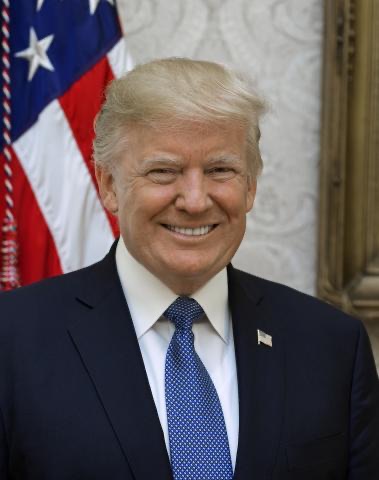
President of the United States
U.S. Secretary of Commerce
CEO of Nvidia

CEO of AMD
business action
Contact the Commerce Department about exemption criteria
The proclamation includes broad exemptions for chips supporting "the U.S. technology supply chain or domestic manufacturing capacity," but the criteria for qualifying are unclear. If you're a business importing advanced chips, you need clarity on what documentation and certification the Commerce Department will require to claim exemptions. The lack of clear guidance creates uncertainty for businesses trying to comply.
"I'm calling about the Jan. 14 semiconductor tariff proclamation.
Key points to mention: • My company imports [Nvidia H200/AMD MI325X/advanced chips] for [specific use] • The proclamation exempts chips that 'contribute to strengthening the U.S. technology supply chain' but provides no clear criteria • Customs and Border Protection issued HTSUS classifications but businesses need detailed guidance on exemptions • Our shipments arrive [date] and we need clarity before the tariff takes effect
Questions:
business action
Monitor the Jul. 1, 2026, Commerce Department review
The proclamation requires the Commerce Secretary to provide an update by Jul. 1, 2026, on the market for semiconductors used in U.S. data centers so Trump can determine whether to modify the tariff. This "performance audit" will determine if the 25% tariff should be expanded to mid-tier chips or if the current scope is sufficient. Businesses and investors should track this review as it will signal the trajectory of Trump's semiconductor trade policy.
"I'm tracking the semiconductor tariff review due Jul. 1, 2026.
Key points to mention: • The proclamation requires Commerce Secretary to update the president on data center chip markets • This review will determine if the tariff should be expanded to mid-tier chips • The review could dramatically broaden tariffs affecting much larger portions of the chip market • Businesses need visibility into this process to plan for potential policy changes
Questions:
civic action
Contact representatives about Section 232 authority abuse
Trump has repeatedly invoked Section 232 "national security" authority to impose tariffs that are actually about industrial policy and economic protectionism. The Supreme Court is currently hearing challenges to Trump's Section 232 tariffs. Contact your representatives to support legislation that would require congressional approval for Section 232 tariffs or narrow the definition of "national security" to prevent abuse of this authority.
"I'm calling about Trump's abuse of Section 232 national security authority to impose tariffs on semiconductors.
Key points to mention: • Section 232 was designed for genuine national security threats, not industrial policy • Trump has now used it for steel, aluminum, copper, autos, lumber, and semiconductors—all claiming 'national security' • The real motive is economic protectionism, not military threats • Supreme Court justices expressed skepticism about Trump's unilateral tariff authority during recent oral arguments • Congress has constitutional authority over trade policy
Question: Will [Representative Name] support legislation requiring congressional approval for Section 232 tariffs or narrowing what qualifies as a national security threat? The president shouldn't have unchecked authority to impose tariffs by labeling everything a security threat."
education
Understand impacts on AI development and data center costs
The 25% tariff on advanced AI chips will increase costs for data centers and AI development in the United States unless they qualify for exemptions. Nvidia and AMD chips are essential for training large language models and running AI inference at scale. Understanding these cost impacts helps you evaluate claims about the tariff's benefits versus its consequences for U.S. technology leadership.
When discussing the semiconductor tariff with others:
"Trump imposed a 25% tariff on Nvidia's H200 and AMD's MI325X chips, claiming it's necessary for national security and domestic manufacturing.
Key points to share: • These are the exact chips needed to build AI systems and power data centers • The tariff exempts U.S. data centers over 100 megawatts, but creates uncertainty and bureaucratic barriers • The vague exemption criteria leave businesses unsure whether they qualify • The tariff could slow AI development, increase cloud computing costs, and give advantages to foreign competitors • The Nasdaq saw a sharp drop when announced as investors recognized potential problems
We should ask whether this actually helps U.S. technology leadership or just creates bureaucratic barriers while foreign competitors gain cost advantages."