October 18, 2025
Seven million Americans defy Trump at No Kings rallies
Largest single-day protest in U.S. history as White House dismisses it
✊Civil Rights🗳️Elections
October 18, 2025
Largest single-day protest in U.S. history as White House dismisses it
Nearly 7 million people attended No Kings rallies on Oct. 18, 2025 across 2,700 sites in all 50 states according to organizers. Data journalist G. Elliott Morris and The Xylom independently verified 5 to 6.5 million based on local official reports and crowd analysis.
The Oct. 18 protests drew 2 million more participants than the Jun. 2025 No Kings rallies (which had 5 million attendees), making Oct. the largest single-day nationwide U.S. protest on record.
Major cities reported massive turnouts: Chicago (250,000), Washington, D.C. (200,000), New York (170,000), Philadelphia (100,000), Bay Area (160,000 to 220,000), and Los Angeles (100,000 to 150,000).
The protests followed Supreme Court oral arguments in Louisiana v. Callais on Oct. 15, 2025, where conservative justices signaled willingness to curtail Section 2 of the Voting Rights Act and narrow vote-dilution protections.
Protesters chanted 'No Kings' to invoke Justice Ketanji Brown Jackson's dissent in Trump v. United States, 603 U.S. 593 (2024), which warned that immunity rulings risk making presidents 'kings above the law.'
A coalition of organizations including Indivisible, MoveOn, the 50501 Movement, and the ACLU coordinated the nationwide rallies emphasizing the 3.5% rule—the theory that if 3.5% of a population mobilizes, significant political change can occur.
Most protests remained peaceful. Los Angeles police arrested 14 people primarily for blocking traffic. No mass violence or property destruction was reported, contradicting Republican warnings.
Republican governors  Glenn Youngkin (Virginia) and Greg Abbott (Texas) mobilized National Guard units ahead of the protests citing security concerns. Texas Gov. Abbott called the Austin protest 'antifa-linked.'
Protests used visual symbols of resistance including inflatable frog, chicken, and dinosaur costumes (inspired by Portland immigration protests), Revolutionary War reenactors, signs with phrases like 'Democracy not Monarchy,' and American flags.
White House spokeswoman Abigail Jackson said of the 7 million-person demonstration: 'Who cares?' House Speaker  Mike Johnson called the protests a 'hate America rally.' Republicans argued protesters were anti-American; supporters framed the marches as patriotic defense of democracy.
Organizers coordinated more than ____ events across all 50 states on October 18.
June 2025 No Kings protests had 5 million attendees. October 18 protests had approximately ____ million attendees.
President Trump was at his Mar-a-Lago resort in Florida during the October 18 protests, not at the White House.
Data journalist G. Elliott Morris and The Xylom verified October 18 protest attendance at 5 to 6.5 million people using local official reports and crowd analysis.
Senator Bernie Sanders spoke to crowds on the National Mall during the Washington, D.C. rally on October 18.
Upgrade to Premium to access all practice questions and unlock advanced quiz features.
Upgrade to PremiumThese questions are part of the Seven million Americans defy Trump at No Kings rallies topic. Master this topic by completing the quiz or exploring each question in detail.
Take the full quiz to master this topic and track your progress.
Start Quiz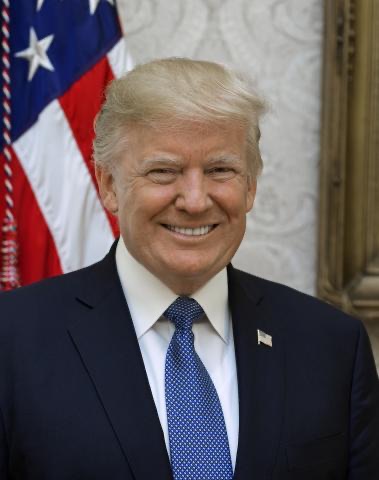
President of the United States; the primary target of protest opposition to his policies and perceived authoritarian actions

Governor of Virginia (R); mobilized National Guard units before the protests citing security concerns; later defended state autonomy against Trump's threatened federal interventions
Governor of Texas (R); ordered state troopers and National Guard to Austin; labeled the protest 'antifa-linked' and promised to 'deter criminal mischief'
Supreme Court Justice whose dissent in Trump v

House Speaker (R); called the Oct. 18 protests a 'hate America rally,' attempting to delegitimize the demonstration
Senator (I-VT); spoke to crowds on the National Mall during the D.C