
April 4, 2026

Senate set an April 16 hearing on Kevin Warsh's bid to replace Jerome Powell at the Federal Reserve

Southern California Law Review
Justia Law
Justia Law
U.S. Senate Banking Committee
+14

Warsh has signaled he would cut rates faster than Powell and give Trump more influence over monetary policy

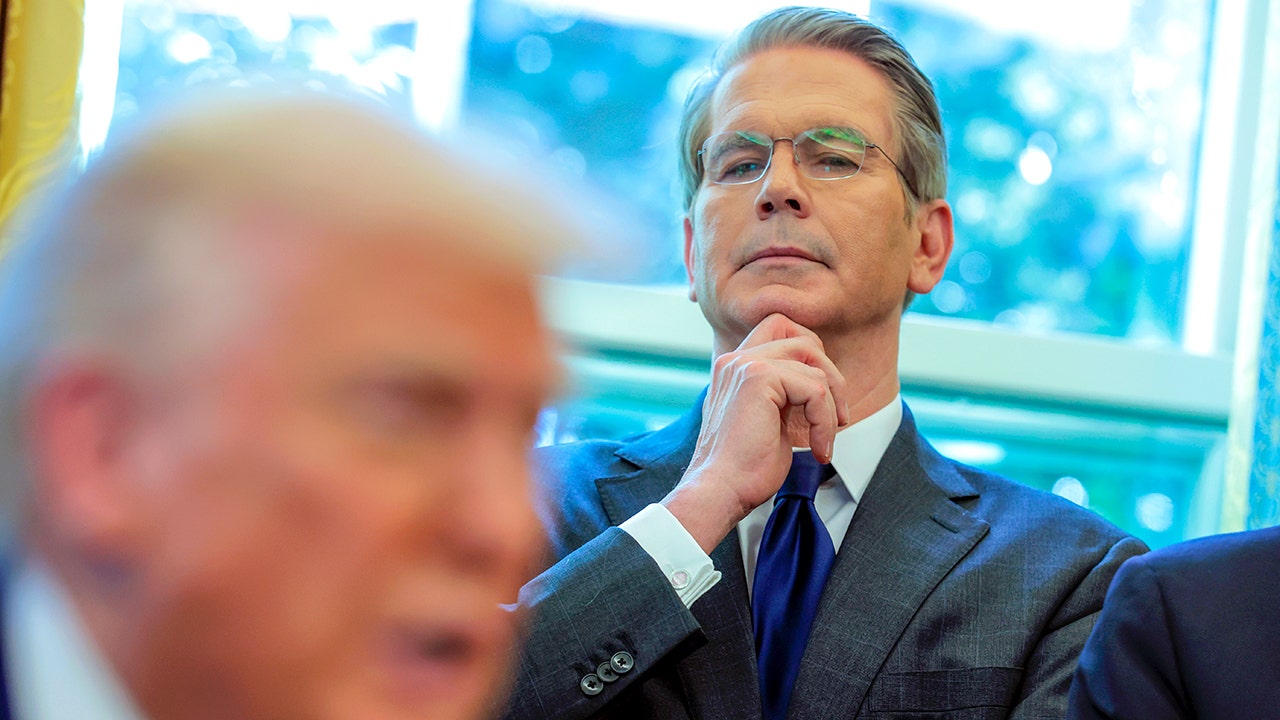
The Senate Banking Committee originally set April 16, 2026 as the date for Kevin WarshKevin Warsh's confirmation hearing, but the hearing was delayed after the committee didn't receive Warsh's required financial disclosure paperwork in time. Warsh was nominated by President Trump on January 30, 2026 and the White House formally transmitted the nomination to the Senate on March 30. Trump submitted two nominations simultaneously: one for the four-year Fed chair term and a second for a 14-year term as a Board of Governors member starting February 1, 2026. Powell's term as chair expires May 15, giving the Senate a hard deadline.

Warsh, 56, served as a Fed governor from 2006 to 2011, appointed by President George W. Bush. Since leaving the Fed, he spent 15 years working for investor Stanley Druckenmiller's family office, where he led venture investments into technology firms including Palantir. He is married to EstΓ©e Lauder cosmetics heir Jane Lauder, whose net worth Forbes estimates at $1.9 billion β€” a financial complexity CNBC cited as a likely factor in the paperwork delay. The White House described Warsh as a believer in a leaner Fed focused primarily on price stability. Sen. Elizabeth WarrenElizabeth Warren (D-Mass.), ranking Democrat on the Banking Committee, called Warsh a rubber stamp for Trump's agenda.
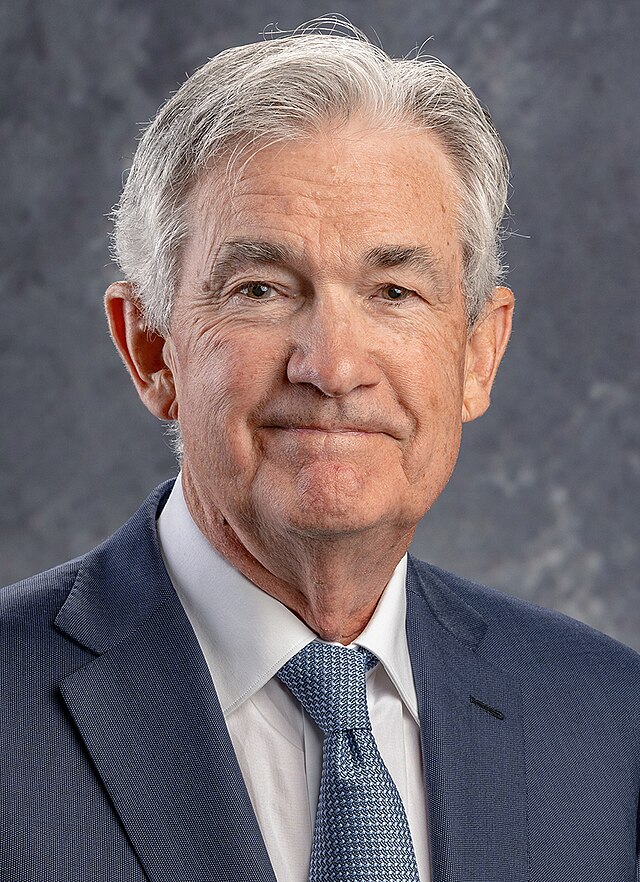
Sen. Thom Tillis (R-N.C.) has placed a hold on all Fed nominees until the Justice Department drops its criminal investigation into Powell. U.S. Attorney for the District of Columbia Jeanine Pirro told CNBC on April 9, 2026 that she plans to move forward with the Powell investigation. That leaves Warsh's confirmation path beyond the hearing unclear. The Senate Banking Committee comprises 13 Republicans and 11 Democrats, meaning a single Republican defection would block the nomination from clearing committee.

Powell has called the investigation a politically motivated attempt to pressure him into cutting interest rates. In a January 2026 Bloomberg interview, JPMorgan CEO Jamie Dimon warned that the DOJ probe risked undermining the Fed's credibility at a moment when that credibility was most needed. National Economic Council Director Kevin Hassett told Fox Business on April 9 that he is highly confident about Warsh's confirmation and said the administration will work out something with Tillis.

Trump has publicly demanded lower interest rates dozens of times since taking office and said he expects the next Fed chair to consult him on rate decisions. Since January 2025, Trump has threatened to fire Powell at least three times, attempted to remove Fed Governor Lisa Cook on legally uncertain grounds, and attempted to require the Fed to submit its proposed rules to White House Office of Management and Budget review. A criminal investigation of a sitting Fed chair is unprecedented in American history. Former Fed Chair Ben Bernanke called the Powell probe an extraordinary attack on Fed independence.

In November 2025, Warsh published a Wall Street Journal op-ed praising the Trump administration's economic approach and calling for a rethinking of inflation dogma at the Fed. He argued the Fed should unload much of its $6 trillion balance sheet, consisting mostly of Treasuries and mortgage-backed securities, because the holdings distort the bond market and encourage the government to run larger budget deficits. Warsh described this as making the Fed leaner and more focused on its core price-stability mandate.

Warsh's rate views have shifted since his first stint at the Fed. He pushed for earlier rate hikes after the 2008 financial crisis and disagreed with Chairman Ben Bernanke's policy of keeping rates low β€” positions economists say would have slowed the recovery. By 2026, Warsh was arguing that AI-driven productivity gains meant the economy could sustain lower rates without triggering inflation. Senate Democrats argued the shift indicates he'll support whatever rate policy Trump prefers.

If confirmed, Warsh would take the Fed chair at a moment of acute economic stress. The U.S. economy faces simultaneously high oil prices from the Iran war's Hormuz closure, a 10-month manufacturing job decline, slowing wage growth, and recession probability estimates ranging from 30 to 49 percent. The Federal Open Market Committee's next scheduled meeting is April 28. Fed governors who spoke publicly in late March signaled they wanted to hold rates steady given Iran war inflation risk and labor market uncertainty.

Warsh's confirmation would give Trump his first Fed chair since his original 2018 nomination of Powell. Democrats have argued a Warsh-led Fed would cut rates to support Trump politically rather than based on economic data. Warsh's supporters argue he is a genuine inflation hawk who would resist political pressure. The confirmation hearing will be the first public test of which characterization holds up under Senate questioning.

The Fed chair's legal protection against firing is unsettled following the D.C. Circuit's December 2025 ruling that Congress can't protect independent agency heads from presidential removal. The ruling applied to the NLRB and MSPB, but its logic β€” that agencies with broad executive power can't have removal protections under the unitary executive theory β€” could extend to the Fed chair. The Supreme Court is expected to hear the case next term.

If the Supreme Court eliminates removal protections for the Fed chair, future presidents could fire Fed chairs at will for policy disagreements. Trump's approach has been to use indirect pressure rather than an outright firing: the DOJ probe, the nomination of a successor, and the OMB rule-review order. The April confirmation hearing will likely produce the first on-the-record testimony from Warsh about whether he believes the president can fire the Fed chair.

The Nixon-Burns precedent is the most direct historical analogue to the current Trump-Powell standoff. In 1971 and 1972, President Nixon repeatedly pressured Fed Chair Arthur Burns to keep interest rates low ahead of the 1972 presidential election. Burns complied. White House tapes later confirmed the pressure. The resulting inflation peaked above 12 percent annually by 1974 and required years of painful tightening to correct.

President Carter appointed Paul Volcker as Fed Chair in 1979 specifically to restore the central bank's credibility after the Burns era. Volcker raised the federal funds rate to nearly 20 percent by 1981, causing a double-dip recession with unemployment peaking at 10.8 percent, but brought inflation below 3 percent by 1983. Congress designed the Fed's 14-year governor terms and presidential non-removal rule after the Nixon-Burns episode. Former Fed Chairs Bernanke, Greenspan, Yellen, and Volcker have all publicly cited the Nixon-Burns precedent as the primary justification for Fed independence.

πŸ’°EconomyπŸ›οΈGovernmentπŸ”Ethics🏒Legislative Process

What you can do

1

civic action

Contact the Senate Banking Committee to submit written questions for the Warsh confirmation hearing

Senate committee hearings include a public comment process. Citizens can submit written statements for the record before or during the April 16 hearing. These statements become part of the permanent Congressional Record.

I'm calling to ask how citizens can submit written statements for the record at the April 16 Kevin Warsh confirmation hearing. I want the committee to have a full record of public concern about Federal Reserve independence.

2

civic action

Contact your senator to urge them to question Warsh about Fed independence at the April 16 hearing

Every senator can submit written questions to a nominee after a confirmation hearing. Constituent calls before the hearing can influence which topics senators prioritize.

I'm calling to urge Senator [Name] to ask Kevin Warsh at his April 16 confirmation hearing whether he believes the president has the legal authority to fire the Fed chair for policy disagreements, and whether he would commit to making interest rate decisions based solely on economic data.

3

research action

Monitor the Federal Reserve's April 28 FOMC decision through the Fed's official website

The Federal Reserve's April 28-29 FOMC meeting is Powell's last before his term expires May 15, 2026 β€” and it arrives in the middle of a war-driven inflation spike, a Warsh confirmation fight, and 30-to-49 percent recession probability estimates. The FOMC statement, released at 2 p.m. Eastern on April 29, will show whether the Fed held rates steady or moved in either direction. Powell's press conference will be scrutinized for any signal about his successor's expected policy direction and the Fed's independence from White House pressure.

This is a research action to monitor the Federal Reserve's April 28 FOMC rate decision.\n\nStep 1: Go to federalreserve.gov/monetarypolicy/fomccalendars.htm β€” the April 28-29, 2026 meeting is Powell's last scheduled FOMC meeting before his term expires May 15\nStep 2: The FOMC statement is released at 2 p.m. Eastern on the second day of the meeting (April 29). Powell holds a press conference immediately after\nStep 3: Watch for the rate decision, the "dot plot" showing where each governor expects rates to go, and Powell's characterization of the economic outlook\nStep 4: Key questions the decision will answer: Did the FOMC hold rates steady given war-driven inflation? Did any governor dissent? Does Powell signal that his successor should cut rates?\n\nKey context:\n- The Fed held rates in the 3.50-3.75 percent range as of April 2026\n- Recession probability estimates range from 30 percent (Goldman Sachs) to 49 percent (Moody's Analytics)\n- JPMorgan CEO Jamie Dimon warned in his April 6, 2026 letter that war-driven inflation could force the Fed to keep rates "higher for longer" or even resume rate hikes\n- Kevin Warsh's confirmation hearing was delayed β€” Powell may preside over the April 28 meeting as the only confirmed chair