January 15, 2026
US seizes sixth Venezuela-linked oil tanker as Trump consolidates control of oil sector


Trump seizes control of Venezuela oil exports through military interdictions
🌍Foreign Policy⚡Energy🛡️National Security
January 15, 2026
Trump seizes control of Venezuela oil exports through military interdictions
US Coast Guard forces seized the oil tanker Veronica in a predawn operation on Jan. 15, 2026 in the Caribbean Sea. The vessel was the sixth tanker detained as part of Trump's effort to control Venezuela's oil exports.
DHS Secretary Kristi Noem announced the seizure on social media, saying the vessel was operating in defiance of President Trump's established quarantine of sanctioned vessels in the Caribbean. The operation was conducted by a Coast Guard tactical team supported by the Navy and happened without incident.
Southern Command said the only oil leaving Venezuela will be oil that is coordinated properly and lawfully. This represents a fundamental shift in US policy—from sanctioning Venezuela's oil exports to directly controlling them through military force. Trump has told oil company executives they're dealing with us directly and not dealing with Venezuela at all, indicating the US is inserting itself as the intermediary for all Venezuelan oil sales.
The tanker seizures began after Trump ordered military strikes on Venezuela and US forces seized President Nicolás Maduro earlier in Jan. 2026. These aggressive actions followed Trump's inauguration and represent an escalation beyond traditional sanctions. Venezuela's interim leader María Corina Machado, who opposes Maduro, has vowed to reform the oil sector and is coordinating with the Trump administration on restructuring Venezuela's energy industry.
The Veronica seizure follows five previous tanker interdictions: The Skipper (seized Dec. 10, 2025), a second tanker (Dec. 20, 2025), the Olina (Jan. 9, 2026), and two others. Each seizure involves Coast Guard tactical teams boarding vessels at sea and taking control. The tankers are being held by US authorities, and their cargo is being redirected according to Trump administration instructions.
Trump has declared an established quarantine of sanctioned vessels in the Caribbean, though the legal basis for this quarantine is disputed. Traditional sanctions prohibit US entities from purchasing Venezuelan oil, but a quarantine goes further by using military force to physically prevent oil from leaving Venezuela unless authorized by the US. This effectively gives the Trump administration veto power over all Venezuelan oil exports.
Venezuela has the world's largest proven oil reserves—approximately 304 billion barrels, larger than Saudi Arabia's reserves. The country's oil production has collapsed under Maduro from 2.4 million barrels per day in 2015 to approximately 800,000 barrels per day in 2025 due to mismanagement, corruption, and sanctions. Trump sees opportunity to control these reserves by forcing Venezuela to sell only through US-approved channels.
The tanker seizures rely on US sanctions authority under the International Emergency Economic Powers Act (IEEPA) and executive orders declaring Venezuela a national security threat. However, using military force to interdict vessels on the high seas represents a more aggressive interpretation of sanctions enforcement. International law experts question whether the US has authority to seize foreign-flagged vessels engaged in trade between third countries.
Congress hasn't authorized military action against Venezuela. The tanker seizures and military strikes occurred under presidential emergency powers without congressional approval. Senate Democrats attempted to pass a War Powers resolution forcing Trump to seek congressional authorization for Venezuela military action, but the resolution failed 50-50 on Jan. 16, 2026 after five Republican senators who initially voted to advance it flipped under White House pressure.
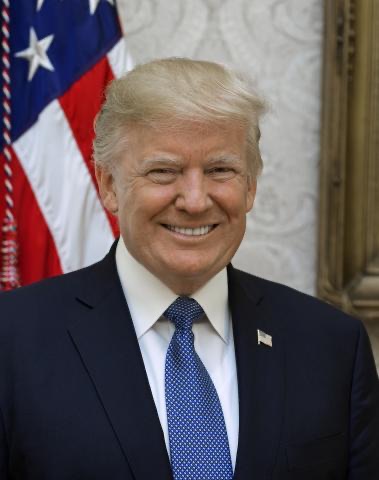
President of the United States
Secretary of Homeland Security
Former President of Venezuela (seized by US forces)
Venezuela's interim leader (US-backed)
civic action
Demand congressional vote on Venezuela military action
Contact senators who voted against the War Powers resolution and demand they support congressional authorization requirements for military operations.
Hi, I'm calling to demand my senator support the War Powers resolution requiring congressional authorization for Venezuela military action.\n\nKey points to mention:\n- Trump seized 6 tankers and ordered military strikes without congressional approval\n- Senate War Powers resolution failed 50-50 on Jan. 16 after Republicans flipped\n- The Constitution requires Congress to authorize military force\n- Seizing a foreign president and controlling their oil is an act of war\n\nQuestions to ask:\n- Why did you vote against requiring congressional authorization?\n- Will you support future attempts to reassert congressional war powers?\n\nSpecific request: I want you to vote for any War Powers resolution that forces Trump to seek congressional approval for Venezuela military operations.\n\nThank you for your time.
civic action
File FOIA request for legal justification of quarantine
Request DOJ legal memos explaining authority for quarantine of sanctioned vessels and seizure of tankers on high seas.
Submit FOIA request for legal justification documents:\n\nRequest:\nAll legal memoranda, opinions, and analyses regarding:\n- Legal basis for Trump's quarantine of sanctioned vessels\n- Authority to seize foreign-flagged tankers on high seas\n- International law analysis of tanker interdictions\n- OLC opinions on presidential authority to control foreign oil exports\n\nCite: 5 U.S.C. § 552\n\nFee waiver request: This information is in the public interest to understand the legal basis for using military force to control another nation's natural resources.\n\nFOIA responses typically take 20-30 days.
civic action
Support international law challenge to tanker seizures
Contact the Center for Constitutional Rights or similar organizations pursuing legal challenges to tanker seizures under international law.