February 3, 2026
Trump hosts Colombian President Petro weeks after calling him a "sick man"

Rubio grants temporary visa after revoking it; Vance, Moreno join talks on drugs and Venezuela
February 3, 2026
Rubio grants temporary visa after revoking it; Vance, Moreno join talks on drugs and Venezuela
Trump hosted Colombian President Gustavo Petro at the White House on February 3, 2026, for a nearly two-hour closed-door meeting. This was their first face-to-face meeting after a year of public feuding, threats, and insults.
Secretary of State  Marco Rubio granted Petro a temporary five-day visa after the State Department revoked it in September 2025. Petro lost his visa when he urged American soldiers to disobey orders during a pro-Palestinian rally at the UN General Assembly in New York.
In January 2025, Trump threatened 25% tariffs (escalating to 50%) after Petro refused to accept U.S. military flights carrying deportees. Colombia backed down within approximately 24 hours, agreeing to all of Trump's terms.
On January 3, 2026, U.S. forces captured Venezuelan President Nicolas Maduro in Operation Absolute Resolve and flew him to New York to face narco-terrorism charges. Trump said Petro 'became very nice' after this operation.
Vice President JD Vance, Secretary of State Marco Rubio, and Sen.  Bernie Moreno (R-OH) joined the meeting. Moreno was born in Colombia and has become a key voice influencing U.S. policy toward the country.
The leaders discussed counternarcotics, Venezuela, energy, and economic development near Colombia's borders with Venezuela and Ecuador. Both sides agreed to restart dialogue on migration and trade.
Petro received a red MAGA hat during the meeting and used a pen to change the slogan to 'Make the Americas Great Again.' Trump gave Petro a signed copy of 'The Art of the Deal' inscribed 'You are great.'
Petro's four-year presidential term ends in August 2026, and Colombia's constitution bars him from seeking re-election. Presidential elections are scheduled for May 31, 2026.
In October 2025, the Trump administration imposed sanctions on Petro, his family, and a member of his government over accusations of involvement in the global drug trade. These sanctions had to be waived for Petro to travel to Washington.
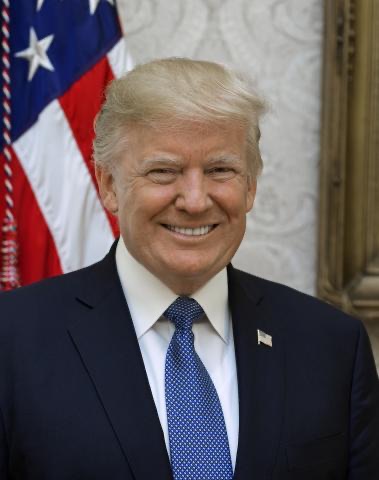
President of the United States
President of Colombia
Secretary of State
Vice President of the United States

U.S. Senator (R-OH)
civic action
Contact your representatives about U.S.-Colombia relations and executive tariff authority
Ask your members of Congress whether they support the president using emergency tariff powers (IEEPA) to pressure allied nations. Congress delegated this authority but can reclaim it through legislation.
My name is [Name] and I am calling about executive tariff authority. The president used emergency economic powers to threaten a close ally, Colombia, with 50% tariffs. I urge my representative to review whether Congress should reclaim its constitutional authority over tariffs.
understanding
Learn about visa revocation as a diplomatic tool and executive immigration powers
Study how the executive branch uses visa policy as diplomatic leverage. The State Department revoked a sitting head of state's visa as punishment, then restored it when the diplomatic relationship improved. Understanding these tools helps citizens evaluate executive power over foreign affairs.
civic action
Track Plan Colombia and U.S. counternarcotics spending in Latin America
Since 2000, the U.S. has spent over $10 billion on Plan Colombia for military and counter-narcotics operations. Citizens can track how these funds are spent and whether counternarcotics agreements from meetings like the Trump-Petro summit produce results.