January 15, 2026
Trump backs down on Insurrection Act threat to Minneapolis
Renee Good's killing sparks protests as lawmakers urge Trump restraint
🏛️Government🗳️Elections✊Civil Rights🏢Legislative Process🛡️National Security
January 15, 2026
Renee Good's killing sparks protests as lawmakers urge Trump restraint
On Jan. 7, 2026, ICE agent Jonathan Ross fatally shot Renee Nicole Good during what the Department of Homeland Security called the largest immigration enforcement operation ever carried out in the United States, deploying approximately 2,000 federal agents to the Minneapolis-Saint Paul area. Good was a 37-year-old American citizen, mother of three, poet, and partner who was not a target of the immigration enforcement operation.
The operation, known as Operation Metro Surge, involved thousands of armed and masked DHS agents conducting militarized raids throughout the Twin Cities. Minneapolis police officers worked more than 3,000 hours of overtime in the first two days responding to incidents related to the federal enforcement activities and public reactions, straining local resources and budgets.
Good was in her maroon Honda Pilot SUV, stopped in the street on Portland Avenue in Minneapolis when Ross, driving separately, pulled alongside her vehicle. Ross exited his vehicle with his face covered and began recording video on his phone.
As Good started driving forward while turning away from Ross in the correct direction of traffic, Ross drew his weapon and fired three shots in under one second—one through the windshield and two through the driver's side window—killing her.
Video analysis by The New York Times and ABC News shows Ross remained upright throughout the encounter, contradicting federal claims that Good attempted to run him over. One agent had reached into Good's car through the open window moments before she drove away, but Ross was never in the path of her vehicle.
President Trump and federal officials defended the shooting, claiming Ross acted in self-defense because Good ran him over and posed a deadly threat. DHS Secretary Kristi Noem backed this narrative and asserted that Minnesota authorities 'don't have any jurisdiction' over federal agents conducting federally authorized operations.
Minneapolis Mayor Jacob Frey watched the video footage and publicly contradicted the federal claims, stating: 'Having seen the video myself, I want to tell everybody directly that is bullshit.'
The video evidence doesn't show Good running over Ross or attempting to strike him with her vehicle. The Justice Department declined to open a civil rights investigation, with an official saying there was 'no basis' for federal civil rights charges.
On Jan. 15, 2026, Trump posted on Truth Social: 'If the corrupt politicians of Minnesota don't obey the law and stop the professional agitators and insurrectionists from attacking the Patriots of I.C.E., who are only trying to do their job, I will institute the Insurrection Act.' He labeled ICE agents as 'Patriots' defending the nation and protesters demanding accountability as 'professional agitators and insurrectionists.'
This language reversal—calling protesters against a fatal shooting 'insurrectionists'—framed the power dynamic: federal agents who kill American citizens deserve military protection, while citizens demanding answers deserve military suppression. The threat came eight years after Trump considered invoking the Insurrection Act during racial justice protests in 2020 but backed down after military leaders publicly opposed using troops against Americans.
The Insurrection Act is a collection of federal statutes dating to 1792 and expanded in 1807 that gives presidents sweeping power to deploy active-duty military forces in U.S. cities to enforce federal law, suppress rebellion, or respond to civil unrest. It overrides the Posse Comitatus Act of 1878, which normally prohibits military involvement in domestic law enforcement except as a tool of last resort.
Presidents have invoked it sparingly in modern history: during the civil rights era to enforce desegregation, during the 1992 Los Angeles riots following the Rodney King verdict, and after Hurricane Katrina in 2005 when local law enforcement collapsed. The Act requires no congressional approval, giving presidents unilateral authority to deploy troops domestically—a power that legal scholars and civil libertarians warn threatens democratic norms when used against protesters exercising First Amendment rights.
Several Republican lawmakers privately urged Trump not to invoke the Insurrection Act, but most refused to take a public position on the threat. Minnesota's four Republicans in Congress—Representatives Tom Emmer, Pete Stauber, Brad Finstad, and Michelle Fischbach—refused to comment on Jan. 15 about Trump's threat to deploy military forces to their state.
Several Republican candidates for governor wouldn't explicitly say whether they would support Trump deploying the military to Minnesota, revealing the political risk of either supporting or opposing Trump's most extreme uses of executive power. The silence demonstrated Republican lawmakers' calculation: publicly supporting military deployment against protesters could backfire, but publicly opposing Trump could trigger primary challenges and loss of party support.
On Jan. 17, 2026, Trump walked back the threat during remarks to reporters, saying: 'I don't think there's any reason right now to use it, but if I needed it, I'd use it.' The retreat came after sustained Republican pressure, growing questions about ICE's aggressive tactics and multiple shootings in Minnesota, and concern that deploying the military would create a constitutional crisis while generating damaging images of American troops confronting American protesters.
Trump's reversal showed the limits of presidential power when even members of the president's own party quietly withdraw political cover. The threat remained implicit: if protests continued or intensified, Trump signaled he might still invoke the Act despite the political costs.
Just hours before Trump's initial Insurrection Act threat on Jan. 15, ICE agents in Minneapolis shot a Venezuelan immigrant in the leg during an attempted arrest, marking the second shooting in eight days by federal agents deployed to Minnesota. This second shooting intensified protests and raised urgent questions about the training, oversight, and use-of-force protocols for the 2,000 agents deployed to the Twin Cities.
Local officials and civil rights groups demanded to know: Were these agents properly trained for urban enforcement operations? What standards govern when federal agents can use deadly force? Why were federal agencies blocking local law enforcement from investigating the shootings? The rapid succession of shootings suggested systemic problems with Operation Metro Surge, not isolated incidents.
An online fundraiser for Renee Good's family raised more than $1.5 million in donations by Jan. 9, 2026, just two days after her death. The family announced the money would be placed in a trust fund for Good's three children.
The fundraiser's rapid success demonstrated public outrage over the killing and widespread skepticism of federal officials' self-defense claims.
On Jan. 8, 2026, former acting U.S. Attorney Joseph H. Thompson and five other federal prosecutors in the District of Minnesota resigned their positions in protest of the Justice Department's handling of the case. The mass resignation of career prosecutors was extraordinary and signaled deep concerns about political interference in the investigation and the Department's refusal to pursue civil rights charges or allow meaningful state and local oversight of the federal agents involved.
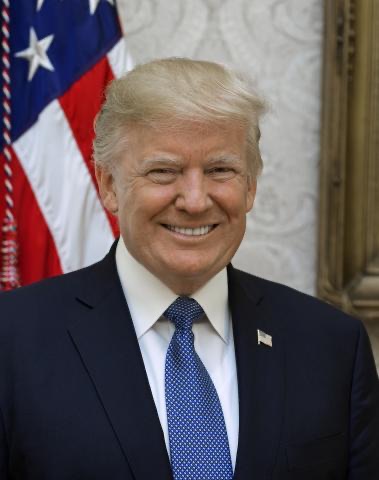
President of the United States
Victim
ICE agent
Mayor of Minneapolis
Former acting U.S. Attorney for the District of Minnesota
Governor of Minnesota
education
Learn about the Insurrection Act and presidential military powers
The Insurrection Act gives presidents sweeping power to deploy troops in U.S. cities. Understanding when and how it can be used helps you evaluate whether such threats are appropriate.
civic action
Contact your representatives about military deployment limits
Congress has the power to reform or limit the Insurrection Act. You can ask your representatives whether they support requiring congressional approval before presidents can deploy troops against American protesters.
Hello, I'm calling about President Trump's threat to invoke the Insurrection Act to send troops to Minneapolis on Jan. 15, 2026. I want to know: Does the representative believe presidents should have unilateral power to deploy the military against American protesters? Would they support requiring congressional approval before invoking the Insurrection Act? Would they support investigations into the ICE shootings that sparked the protests? Please share my concerns with the representative.
civic action
Support independent investigations of ICE shootings
The Renee Good shooting and the shooting of a Venezuelan immigrant raised questions about ICE training and use of force. You can demand independent investigations rather than letting federal agencies investigate themselves.