Trump pressures Alito and Thomas to retire before Senate Democrats could block replacements
Trump pressures justices to retire before GOP loses Senate majority
👨⚖️Judicial Review📜Constitutional Law🏛️Government🗳️Elections
Trump pressures justices to retire before GOP loses Senate majority
On April 15-16, 2026, President Trump told Fox Business that Justices Alito and Thomas should retire while he remains president and Republicans control the Senate. Trump said it would be nice for them to step down and invoked Justice Ruth Bader Ginsburg, who declined to retire and died in office, allowing Trump to replace her with Amy Coney Barrett. Trump said he wanted younger justices who could serve 40 years.
This public campaign marked a striking moment: a sitting president explicitly pressuring sitting justices to leave office based on political timing. Trump framed it as respectful, but the message was unmistakable. Retire now while the Republican Senate can confirm your successor, or risk dying in office and having a Democratic president choose your replacement.
Senate Majority Leader John Thune told the Washington Examiner on April 14 that Republicans are fully prepared to confirm a replacement if Alito or Thomas retires. Thune emphasized confirmation would happen before November midterms, when Democrats might take Senate control. Senate Judiciary Committee Chairman  Chuck Grassley recommended either Ted Cruz or Mike Lee as preferred nominees.
Cruz clerked for Chief Justice William Rehnquist (1996-1997) and argued before the Supreme Court nine times as Texas solicitor general, winning five cases. Lee clerked for Justice  Samuel Alito on both the Third Circuit (1998-1999) and the Supreme Court (2006-2007). Both sit on the Senate Judiciary Committee. The infrastructure for rapid confirmation is already in place.
The Constitution grants federal judges tenure during good behavior, meaning they serve for life with no mandatory retirement age. No constitutional rule requires or permits judges to retire at any specific age. Justices have served into their 90s. John Paul Stevens retired at 90 in 2010. Ruth Bader Ginsburg served until her death at 87. This means Alito and Thomas face no external requirement to retire; the decision rests entirely with them.
However, justices have increasingly considered political timing when deciding whether to retire. Stephen Breyer faced pressure from liberals to retire during Biden's presidency in 2022 and ultimately did. The Framers designed lifetime tenure to insulate judges from political pressure, but strategic retirements have made that protection less reliable.
Trump appointed three justices: Neil Gorsuch, Brett Kavanaugh, and Amy Coney Barrett. These three votes, combined with Alito, Thomas, and Chief Justice John Roberts, create a 6-3 conservative supermajority. If Trump replaces Alito or Thomas with a younger conservative, the ideological balance does not shift immediately, but a 7-2 majority would give conservatives supermajority power even with future potential switches.
A 7-2 court could overturn more precedents, limit voting rights protections, restrict labor organizing, weaken environmental enforcement, and narrow civil rights protections. The political stakes drive the urgency: Republicans fear losing Senate control in November, making this the last realistic window for confirming nominees under a friendly president and Senate.
Republicans hold 53 Senate seats today. Prediction markets show roughly 50-53 percent odds that Democrats will control the Senate after November 2026 midterms. Economic volatility and an unpopular trade war may work against the incumbent party. If Democrats take the Senate, they could block any Trump nominee.
This creates a political squeeze: Alito and Thomas face a choice between retiring now while Republicans control the Senate or waiting and potentially serving under a Democratic president who would nominate their replacements. Thomas has indicated he intends to serve past 2028. Alito's intentions are less clear. His October 2026 book release has fueled speculation that he may be preparing to step down.
When Amy Coney Barrett was nominated in September 2020 to fill Ginsburg's seat, the full confirmation process took 27 days from announcement to Senate vote. Trump's previous justices faced longer timelines: Kavanaugh took 88 days, Gorsuch took 66 days. Senate floor rules allow Supreme Court nominations to pass with a simple majority after the 2017 nuclear option eliminated the filibuster for judicial nominations.
Thune's statement that Republicans would confirm before November midterms suggests a similar expedited timeline, likely several weeks from nomination to final vote. This speed contrasts sharply with the months-long process the Constitution's framers envisioned.
The Framers designed Article III lifetime tenure to protect judicial independence by freeing judges from political calculations. But modern retirement politics have inverted that protection. Justices now face pressure to consider when to retire based on which party controls the presidency and Senate. Breyer's 2022 retirement under Biden set a precedent: retire during a friendly presidency to ensure an ideologically compatible successor.
Alito and Thomas face enormous pressure through media commentary, direct presidential statements, and legislative signals. Some legal scholars argue that the vulnerability of lifetime tenure to political timing suggests the Framers' design is under stress. Others argue that term limits or staggered presidential appointment schedules would insulate the judiciary from political retirement cycles.
Clarence Thomas was appointed by President George H.W. Bush in 1991 and is 77 years old. He is on course to surpass John Marshall's record as the longest-serving justice in Supreme Court history if he serves through May 2028. Thomas has ruled out retiring in recent years. Some court experts say they would be utterly shocked if Thomas retired in 2026.
Alito reached his 20-year tenure milestone in January 2026. Court watchers have pointed to this as a potential retirement moment. His close associates have reportedly indicated privately that he would prefer a Republican president to select his successor. The dynamics are very different for each justice: Thomas appears committed to staying, while Alito's situation is less certain.

President of the United States
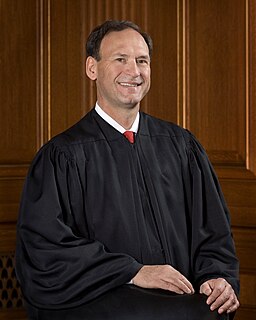
Associate Justice of the Supreme Court
Associate Justice of the Supreme Court
Senate Majority Leader

Senate Judiciary Committee Chairman
U.S. Senator from Texas; Member, Senate Judiciary Committee
U.S. Senator from Utah; Member, Senate Judiciary Committee
civic action
Contact your senator and ask where they stand on judicial independence and Supreme Court confirmation timing
The Republican Senate is signaling it will move rapidly to confirm a replacement if Alito or Thomas retires. This is an opportunity to push back on the politicization of Supreme Court retirements. Senators should publicly commit to protecting the principle that justices decide when to retire based on their own judgment, not presidential pressure.
Hello, my name is [NAME] and I'm a constituent from [CITY]. I'm calling about the Supreme Court. President Trump publicly pressured Justices Alito and Thomas to retire so he can replace them before the midterms. I want to know: Does my senator believe justices should make retirement decisions free from presidential pressure? Will my senator oppose a rushed confirmation if the timing is driven by election politics rather than normal succession? The Constitution gives judges lifetime tenure to protect their independence. I'm asking my senator to protect that principle.
civic action
Contact your House representative about legislation to protect judicial independence from political retirement pressure
Congressional action could establish norms around Supreme Court retirements. Representatives could introduce bills requiring waiting periods before confirmation votes, establishing standards for evaluating nominees based on qualifications, or reforming how the Senate processes judicial nominations.
Hi, my name is [NAME] from [CITY]. I want to ask my representative to consider legislation protecting Supreme Court judicial independence. President Trump pressured Justices Alito and Thomas to retire based on political timing. The Constitution intended lifetime tenure to prevent exactly this kind of pressure. I want my representative to support bills that protect justices from political pressure to retire at electorally convenient times. This protects the independence of the judiciary from all presidents, not just Trump.
civic action
Join or support organizations defending the Supreme Court's institutional independence from political pressure
Several organizations focus on judicial independence and Supreme Court reform, including the Brennan Center for Justice, Constitutional Accountability Center, and Alliance for Justice. Supporting these organizations amplifies advocacy against the erosion of judicial independence.
I want to support organizations defending Supreme Court independence from political pressure. The Brennan Center, Constitutional Accountability Center, and Alliance for Justice all work on this issue. I can join their mailing lists, attend events, or donate to amplify the message that justices should make retirement decisions based on their own judgment, not political timing.