January 20, 2026
Supreme Court rules void judgments have filing deadline
Court ends exception allowing unlimited time to challenge judgments
⚖️Justice📜Constitutional Law
January 20, 2026
Court ends exception allowing unlimited time to challenge judgments
The Supreme Court issued its unanimous decision on Jan. 20, 2026, in Coney Island Auto Parts Unlimited v. Burton, case number 24-808. Justice  Samuel Alito wrote the opinion.
All nine justices joined the decision, though Justice Sonia Sotomayor filed a separate opinion concurring in the judgment. The ruling resolved an 11-1 circuit split on whether time limits apply to motions challenging void judgments.
Federal Rule of Civil Procedure 60(b)(4) allows parties to seek relief from void judgments. A judgment is void if the court lacked jurisdiction or proper service wasn't made. Rule 60(c)(1) requires that motions under Rule 60(b) be filed 'within a reasonable time.' Courts had disagreed on whether this time limit applies to Rule 60(b)(4) motions alleging voidness.
Vista-Pro Automotive entered bankruptcy in 2014 and sued Coney Island Auto Parts over $50,000 in unpaid invoices. Vista-Pro attempted to serve Coney Island by mail.
Coney Island claimed Vista-Pro didn't comply with Federal Rule of Bankruptcy Procedure 7004(b)(3)'s mail service requirements. Coney Island didn't file an answer. The bankruptcy court entered a default judgment in 2015.
For six years, Vista-Pro's bankruptcy trustee attempted to collect the judgment. In 2021, a U.S. marshal seized $97,000 from Coney Island's bank account.
Coney Island then filed a motion under Rule 60(b)(4) to vacate the judgment as void for lack of proper service. The company waited six years from the 2015 judgment to challenge it.
The bankruptcy court denied Coney Island's motion, finding the six-year delay violated Rule 60(c)(1)'s 'reasonable time' requirement. The U.S. District Court for the Middle District of Tennessee affirmed.
The 6th Circuit Court of Appeals upheld the ruling in a divided decision. Judge McKeague dissented, arguing that a judgment void for lack of jurisdiction is a legal nullity that can't gain validity through delay.
Coney Island argued that void judgments are 'legal nullities' that can be challenged at any time without time limits
The company cited Supreme Court precedent calling void judgments legal nullities in United Student Aid Funds v
Espinosa (2010) Coney Island contended that Rule 60(c)(1)'s time limit shouldn't apply to truly void judgments because such judgments have no legal effect from the beginning.
The Supreme Court rejected this argument. Justice Alito wrote that even if void judgments are legal nullities, 'the same principle holds true for most legal errors, yet statutes and rules routinely limit the time during which a party can seek relief from a judgment infected by error.' The Court said allowing unlimited time to challenge void judgments would have 'extreme implications,' such as allowing parties to ignore appeal deadlines when subject-matter jurisdiction is contested.
The Court explained that Rule 60(c)(1)'s 'reasonable time' requirement accommodates scenarios where defendants don't learn about proceedings until after judgment. In default judgment cases, it might be reasonable for a defendant not to seek relief until learning about enforcement. The reasonableness standard is flexible enough to account for notice problems without creating an unlimited time window for challenges.
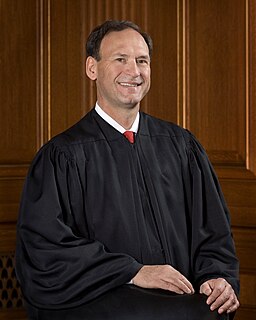
Supreme Court Justice
Supreme Court Justice
Defendant/petitioner
Chapter 7 bankruptcy trustee for Vista-Pro
understanding
Review Rule 60 motion deadlines if you face default judgments
Understand that challenges to void judgments now have 'reasonable time' limits even if the judgment lacked proper service or jurisdiction.
learning more
Study circuit court decisions on what constitutes 'reasonable time'
Research how courts define 'reasonable time' under Rule 60(c)(1) to understand how long parties have to challenge judgments.