January 21, 2026
Supreme Court signals it will keep Lisa Cook at Fed as DOJ opens criminal investigation of Powell


Justices skeptical of Trump's mortgage fraud claims against Cook
📜Constitutional Law🏛️Government🛡️National Security
January 21, 2026
Justices skeptical of Trump's mortgage fraud claims against Cook
Trump attempted to fire Fed Governor Lisa Cook on Aug. 25, 2025, citing allegations of mortgage fraud raised by Federal Housing Finance Agency Director Bill Pulte. Trump claimed Cook made false statements on mortgage documents when she described an Atlanta condo as both a 'vacation home' on a May 2021 loan estimate and a '2nd home' on a security clearance form.
Cook's attorney Abbe Lowell called the allegations 'flimsy' and 'unproven,' noting they rested on 'one stray reference' in a 2021 mortgage document that was 'plainly innocuous' given Cook's other truthful disclosures. No criminal charges have been filed, and no financial institutions involved in Cook's mortgages have raised fraud claims.
At Jan. 21, 2026 oral arguments, Supreme Court justices expressed skepticism about Trump's firing authority. Justice Brett Kavanaugh, a Trump appointee, warned that allowing Cook's firing to proceed 'would weaken, if not shatter, the independence of the Federal Reserve.'
Chief Justice John Roberts suggested it was pointless to return the case to lower courts rather than issue a more enduring ruling. Multiple justices questioned whether Trump's purported 'for cause' justification was legitimate, given the timing after Trump criticized the Fed's interest rate decisions.
The Federal Reserve Act of 1913 allows presidents to remove Fed governors only 'for cause,' meaning malfeasance or dereliction of duty. The law doesn't define what constitutes 'cause,' but it's historically been understood to mean serious misconduct in office.
Cook was appointed by President Biden in 2022 to fill an unexpired term and reappointed in 2023 to serve a full 14-year term ending in 2038. She's the first Black woman to serve on the Fed Board of Governors.
The Justice Department opened a criminal investigation of Fed Chair  Jerome Powell on Jan. 9, 2026, serving grand jury subpoenas related to his Jun. 2025 Senate Banking Committee testimony about cost overruns at Federal Reserve buildings being renovated for the first time since the 1930s. Powell disclosed the investigation in an extraordinary public statement on Jan. 11, calling it a 'pretext' for the real reason: the Fed's refusal to lower interest rates as quickly as Trump demanded in 2025.
Powell said in a video message, 'The threat of criminal charges is a consequence of the Federal Reserve setting interest rates based on our best assessment of what will serve the public, rather than following the preferences of the president.' Powell attended the Jan. 21 Supreme Court oral arguments in person, which is unusual for a Fed chair. His term as chair expires in May 2026, but his term as a Fed Board member continues until early 2028.
If Trump succeeds in removing Cook, he could replace her with his own appointee and potentially gain a majority on the Fed's seven-member board. Combined with Powell's potential removal if the criminal investigation produces charges, Trump could reshape the Fed's leadership to favor his preference for lower interest rates. Fed chairs and governors have historically set rates based on economic data and the Fed's dual mandate of price stability and maximum employment, not presidential preferences.
Trump has repeatedly criticized Powell as 'incompetent' and 'crooked' and attacked the Fed for not lowering rates fast enough. The Fed cut a key interest rate three times in the last four months of 2025 but suggested it may leave rates unchanged in coming months over inflation worries. Trump wants faster cuts to stimulate economic growth, but Fed officials worry that cutting too quickly could trigger higher inflation.
Former Fed chairs and senior officials issued a joint statement warning that political interference with the Fed is 'how monetary policy is made in emerging markets with weak institutions, with highly negative consequences for inflation and the functioning of their economies more broadly.' 593 economists and several Nobel laureates signed an open letter defending Federal Reserve independence and warning that firing Cook would erode trust in 'one of America's most important institutions.'
Federal Reserve Board Governor
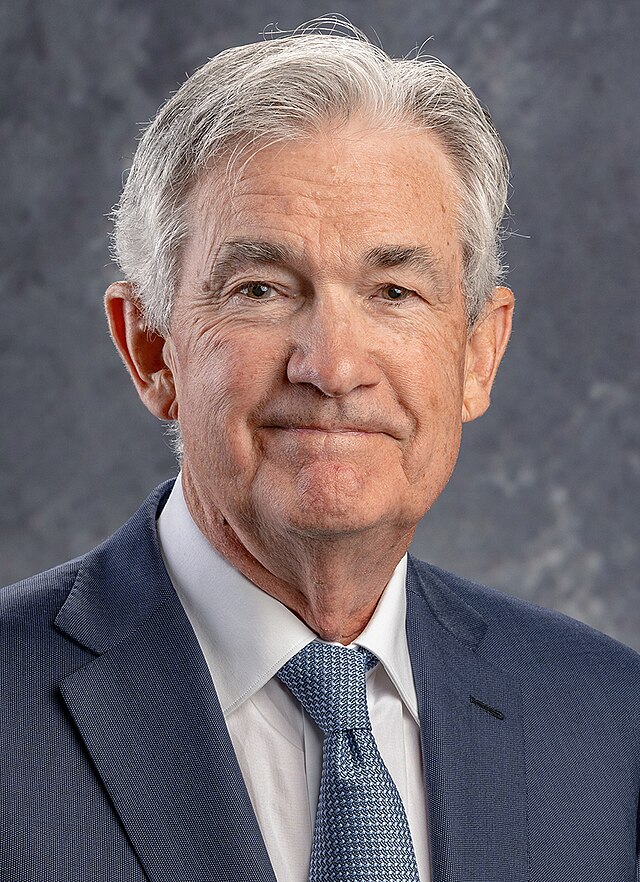
Federal Reserve Chair
Supreme Court Justice
Federal Housing Finance Agency Director
Attorney for Lisa Cook
Solicitor General
civic action
Contact your senator about Fed independence protections
Demand they introduce legislation codifying what constitutes 'for cause' removal of Fed governors to prevent political interference with monetary policy
Hi, I'm calling to urge Senator [Name] to introduce legislation protecting Federal Reserve independence by codifying 'for cause' removal standards for Fed governors.
Key points:
Questions to ask:
Request: I want legislation that prevents presidents from firing Fed officials for disagreeing with their preferred interest rates.
civic action
Submit amicus brief supporting Cook through economic organizations
Coordinate with professional economics associations to file friend-of-the-court briefs defending Fed independence before Supreme Court ruling
Subject: Request for Amicus Brief Supporting Fed Independence in Trump v. Cook
I'm writing to request that the American Economic Association file an amicus brief supporting Federal Reserve independence in the Trump v. Cook Supreme Court case.
Key points:
Request: I urge the AEA to file an amicus brief explaining the economic importance of Fed independence from political pressure.
Thank you for your consideration.
civic action
File ethics complaint about Powell criminal investigation
Report the Justice Department's criminal investigation of Powell as apparent political retaliation for Fed independence to DOJ Inspector General
Subject: Complaint - Criminal Investigation of Fed Chair Appears to Be Political Retaliation
I'm filing a complaint regarding the Justice Department's criminal investigation of Federal Reserve Chair Jerome Powell.
Facts:
Request: I request the OIG investigate whether this criminal probe is politically motivated retaliation for Powell's refusal to lower interest rates based on presidential preferences rather than economic data.
civic action
Support legislation requiring Senate confirmation for Fed governors
Contact House Financial Services Committee to demand hearings on strengthening Fed independence protections and Senate confirmation processes
Hi, I'm calling to demand hearings on strengthening Federal Reserve independence protections.
Key points:
Questions:
Request: I want hearings investigating threats to Fed independence and legislation that clearly defines grounds for removing Fed governors to prevent political interference.