February 4, 2026
Supreme Court rejects GOP challenge to California redistricting map


Five GOP-held seats could flip as California primaries begin Feb. 9
📜Constitutional Law🏛️Government
February 4, 2026
Five GOP-held seats could flip as California primaries begin Feb. 9
The Supreme Court issued an unsigned order on Feb. 4, 2026 allowing California to use its new congressional map for the 2026 midterm elections
There were no noted dissents—all justices agreed
The court didn't explain its reasoning Unsigned orders with no dissents typically indicate the Court found no serious constitutional issue worth detailed analysis or oral argument.
California voters approved Proposition 50 in November 2025 with 64% support
The ballot measure authorized the state legislature to redraw congressional districts mid-decade
Typically, states only redraw maps after the census every 10 years California can now redraw districts whenever voters approve it.
Governor  Gavin Newsom championed Proposition 50 as a direct response to Texas. In November 2025, Texas Republicans passed a mid-decade redistricting plan that gave the GOP five additional House seats.
President Trump backed the Texas plan publicly. Newsom argued that California needed to respond or let Republicans gain an unfair advantage.
The new California map targets five Republican-held congressional seats
Democrats currently hold 43 of California's 52 House seats
Republicans hold 9 If Democrats flip all five targeted seats, they'll hold 48 of 52 That's a 92% supermajority in a state Trump lost by 29 points in 2024.
Republican challengers sued to block the map in federal court. They argued it was an unconstitutional racial gerrymander that packed Latino voters into certain districts to dilute their influence elsewhere.
A three-judge federal panel in Los Angeles ruled 2-1 against them on Jan. 15, 2026. The majority found the map was drawn for partisan advantage, not racial reasons.
The Supreme Court ruled in Rucho v
Common Cause (2019) that partisan gerrymandering is a 'political question' outside federal courts' jurisdiction
Chief Justice Roberts wrote that while partisan gerrymandering is 'incompatible with democratic principles,' federal courts lack 'workable standards' to decide when it goes too far That precedent meant California's partisan map couldn't be blocked.
Filing for congressional primaries in California begins Feb. 9, 2026. Candidates will now run in the newly drawn districts. California uses a top-two primary system.
The two candidates with the most votes advance to the general election regardless of party. Democrats expect to win multiple seats that Republicans currently hold.
Both parties now use mid-decade redistricting strategically. Texas redrew maps in November 2025. California responded in December 2025.
North Carolina Republicans announced a redraw on Oct. 23, 2025.
Democratic governors in Illinois and Maryland are considering similar moves. The practice accelerates because the Supreme Court won't stop it.

Governor of California
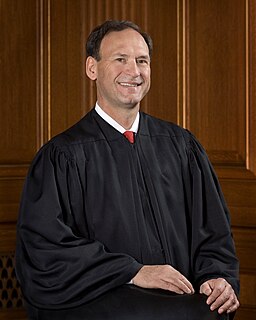
Associate Justice, U.S. Supreme Court

Chief Justice, U.S. Supreme Court

President of the United States

U.S. Representative (D-CA-11), former Speaker of the House
Former Speaker of the House, former U.S. Representative (R-CA-20)
civic action
Support redistricting reform in your state
Many states allow mid-decade redistricting when one party controls the legislature. Independent redistricting commissions can prevent partisan gerrymandering. Check if your state has reform initiatives on the ballot.
civic action
Track your district boundaries after redistricting
Mid-decade redistricting can change which representative serves your address. Check if you're still in the same district. Your voting location may also change. Visit your county elections office website to confirm your current district and polling place.
civic action
Monitor federal legislation to limit mid-decade redistricting
Congress could pass legislation prohibiting states from redistricting except after the census. The For the People Act included such provisions but didn't pass. Contact your senators and representative to ask if they support restricting mid-decade redistricting by both parties.