April 3, 2026
Twenty-three states sued Trump over his executive order giving DHS control over mail ballot eligibility
The order would let USPS reject mail ballots from voters not cleared by a federal database
April 3, 2026
The order would let USPS reject mail ballots from voters not cleared by a federal database
Trump signed on March 31, 2026, naming it 'Ensuring Citizenship Verification and Integrity in Federal Elections.' It was and took immediate effect. It was Trump's second major executive order targeting election administration. His first, issued in January 2025, was repeatedly.
The order cited the president's Article II authority and a 2002 federal statute, the Help America Vote Act, as its legal basis. But election law scholar
Rick Hasen those citations didn't hold up: the Help America Vote Act creates election administration standards but doesn't grant presidents the authority to override state election rules through executive action.
The core mechanism of the order is a voter eligibility list controlled by the federal government. The order directs DHS to and provide that list to state officials at least 60 days before every federal election. The Postal Service must then use this 'State Citizenship List' to create a parallel list of individuals approved to receive mail or absentee ballots.
USPS can only send mail ballots to people whose names appear on the federally maintained list. Anyone who applies for a mail ballot through their state's normal process but doesn't appear on DHS's list could be denied delivery of their ballot, .
The order adds barcode tracking requirements to every mail ballot. All ballot envelopes must carry a unique for USPS tracking. Ballot envelopes must pass a design review by USPS before states can use them. All ballot mail must bear an 'Official Election Mail' designation from USPS. The Postmaster General must issue a proposed rule within 60 days of the signing and a final rule within 120 days, well before the November 2026 midterms.
Election administrators in states that print millions of ballot envelopes each cycle said the design review requirement alone would force months of re-procurement. Arizona Secretary of State
Adrian Fontes the compliance timeline was impossible to meet before November 2026.
The of Article I reads: 'The Times, Places and Manner of holding Elections for Senators and Representatives, shall be prescribed in each State by the Legislature thereof; but the Congress may at any time by Law make or alter such Regulations.' Courts have consistently interpreted this to mean states set the default rules, and Congress can override them, but only by passing a law, not by executive action.
California AG Rob Bonta's cited the Elections Clause as its primary constitutional basis. Election law scholar
Rick Hasen , telling NPR the order was clearly unconstitutional.
Common Cause the day after the order was signed. The ACLU . Both suits argued the order violated the Elections Clause and the principle that the president can't use executive orders to perform functions the Constitution assigns to Congress.
Common Cause estimated from the order. The organization said voters in states with high mail-ballot participation, including Arizona, Colorado, Oregon, Washington, and Nevada, faced the greatest exposure to ballot delivery disruption.
Twenty-two states over EO 14399. California AG Rob Bonta . Pennsylvania Governor Josh Shapiro joined as a plaintiff alongside state attorneys general from Massachusetts, Nevada, Washington, Oregon, Vermont, and others. Arizona Attorney General Kris Mayes and Secretary of State
Adrian Fontes filed jointly.
Colorado AG Phil Weiser , marking his 64th legal challenge to the Trump administration during 2026. The coalition's argued the order violated the Elections Clause, the Tenth Amendment, and the Administrative Procedure Act.
Delaware AG Kathy Jennings , stating that 'the president lacks the constitutional authority to seize control of our elections.' New York AG Letitia James citing Elections Clause violations, NVRA violations, and APA violations.
U.S. District Judge Denise Casper Trump's January 2025 anti-voting order on Elections Clause grounds, writing that 'The Constitution does not grant the President any specific powers over elections.' That pattern of legal defeats on the same constitutional theory put the administration on notice that EO 14399 faced serious judicial risk.
Trump signed EO 14399 approximately seven months before the . States that conduct all-mail elections (Oregon, Washington, Colorado, Hawaii, and Utah) would need to restructure their entire ballot delivery systems to comply with the order's federal list requirement. Colorado Secretary of State Jena Griswold 'undemocratic, unconstitutional, and dangerous.' Colorado announced it was joining the coalition that day.
The was the administration's primary statutory justification, but election law attorneys said the administration's theory inverted the law's actual requirements, which create election standards without granting the president authority to override state rules.

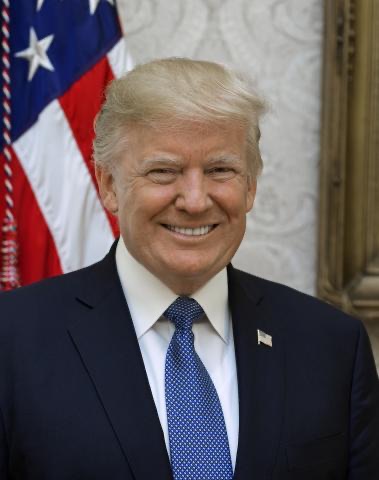
President of the United States
California Attorney General
Delaware Attorney General
Arizona Attorney General

Arizona Secretary of State
Pennsylvania Governor
Massachusetts Attorney General
Professor of Law, University of California Irvine School of Law; election law scholar
New York Attorney General
Colorado Secretary of State
Colorado Attorney General
U.S. District Judge, District of Massachusetts