Supreme Court weighs whether agencies can fine companies without jury trial


AT&T and Verizon sold location data to bounty hunters without warrants
📜Constitutional Law👨⚖️Judicial Review🔒Digital Rights⚖️Justice
AT&T and Verizon sold location data to bounty hunters without warrants
In 2018, investigative reporters revealed that AT&T, Verizon, Sprint, and T-Mobile had been selling their customers' real-time location data to companies called location aggregators, who resold access to that data to law enforcement, bail bondsmen, and private investigators. The carriers did not require a warrant or court order before allowing these third parties to ping a customer's phone and determine its location within a few hundred yards. Securus Technologies, one of the aggregators, provided this service to at least 3,100 law enforcement agencies nationwide.
Missouri sheriff Cory Hutcheson was among those who abused the system. He used Securus to track hundreds of people, including judges and police officers, by submitting fraudulent certifications that the tracking was authorized. Federal prosecutors charged Hutcheson with wire fraud and identity theft, and he pleaded guilty in November 2018. His case illustrated the complete absence of oversight: carriers sold the data with no mechanism to verify the legal justification provided by buyers.
The Federal Communications Commission investigated the carriers and in February 2024 issued four massive fines: $57.3 million against AT&T, $46.9 million against Verizon, $80.1 million against T-Mobile, and $12.2 million against Sprint. The FCC charged that carriers violated Section 222 of the Telecommunications Act of 1996, which requires them to protect Customer Proprietary Network Information, including location data. The fines were the largest the FCC had ever issued under its privacy enforcement authority.
Both AT&T and Verizon challenged the fines, arguing the FCC's enforcement process was unconstitutional. Under that process, the FCC issues a Notice of Apparent Liability, holds an internal proceeding before agency staff, and issues a final forfeiture order without any involvement from a federal court or jury. AT&T sought review in the Fifth Circuit; Verizon sought review in the Second Circuit.
The Fifth Circuit sided with AT&T in April 2025. Writing for a three-judge panel, Judge Stuart Kyle Duncan held that the FCC's in-house process violated both the Seventh Amendment right to a jury trial and Article III's requirement that federal judicial power remain with the courts. Duncan applied the Supreme Court's June 2024 ruling in SEC v. Jarkesy, which found that the SEC could not use administrative law judges to impose fraud penalties because such penalties are inherently legal in nature and must be tried before a jury.
Duncan wrote that the FCC's proceeding was constitutionally defective because the Commission acted as prosecutor, jury, and judge in the same case. He rejected the FCC's argument that a potential DOJ enforcement action in a separate federal lawsuit would satisfy the Seventh Amendment. The court held that the right to a jury trial must be available in the proceeding where liability is determined, not in a downstream action to collect an already-determined penalty.
The Second Circuit reached the opposite conclusion in Verizon's case. That court held that the FCC's enforcement scheme satisfies the Seventh Amendment because Congress may assign enforcement of public regulatory statutes to agency proceedings without a jury trial, under the public rights doctrine. The doctrine allows Congress to handle certain government-created rights and obligations without juries. The D.C. Circuit had also ruled in favor of FCC authority in a parallel case.
The Supreme Court granted certiorari in both cases and consolidated them for argument on April 21, 2026. The central question is whether the FCC's forfeiture proceedings fall within the public rights exception to the Seventh Amendment, or whether civil penalties of this magnitude are inherently legal claims that require a jury. A ruling for AT&T and Verizon would effectively require the FCC, and potentially dozens of other agencies, to litigate civil penalty cases in federal court rather than through in-house administrative tribunals.
The stakes extend far beyond AT&T and Verizon. More than two dozen federal agencies use administrative enforcement proceedings to impose civil monetary penalties, including the Securities and Exchange Commission, the Environmental Protection Agency, the Federal Trade Commission, the Federal Energy Regulatory Commission, and the Occupational Safety and Health Administration. A broad ruling in favor of the carriers would require all of these agencies to take penalty cases to federal court, where defendants could demand jury trials and discovery, significantly slowing enforcement timelines.
The FCC, represented by Solicitor General D. John Sauer, argues that Congress has broad latitude to create administrative enforcement systems for regulatory statutes and that requiring jury trials for every civil penalty would dismantle a century of administrative law. AT&T and Verizon counter that the size of the penalties, totaling over $100 million, places the cases firmly within the category of legal claims that the Founders understood to require juries. The Court is expected to issue a ruling by the end of June 2026.
FCC Chair  Brendan Carr was designated by President Trump in January 2025. Carr has supported aggressive enforcement of media regulations while simultaneously pushing for deregulation in other areas. The current FCC under Carr would be directly affected by the ruling: if the Court sides with the carriers, the agency would lose its primary tool for quickly penalizing companies that violate privacy rules, and future enforcement actions would require DOJ referral and federal court litigation.
Former FCC Chair Jessica Rosenworcel, who issued the 2024 fines before leaving office at Trump's inauguration, had called the location data sales a brazen breach of the privacy our laws require. The case represents an unusual alignment in which the Trump FCC finds itself defending Biden-era enforcement actions in front of a conservative Supreme Court majority that has shown skepticism toward broad administrative power.
The constitutional tension in FCC v. AT&T traces to a century-long dispute over how much enforcement power Congress can give agencies without involving courts or juries. The Supreme Court's 1856 decision in Murray's Lessee v. Hoboken Land & Improvement Co. first articulated the public rights doctrine, allowing Congress to assign government-sovereign claims to administrative bodies. Congress expanded that framework under the New Deal, creating dozens of agencies with in-house adjudication authority. The Supreme Court upheld it in Atlas Roofing Co. v. OSHA (1977), holding that OSHA could impose civil penalties through in-house proceedings without juries.
The current Court has moved against that framework in a sequence of decisions. West Virginia v. EPA (2022) applied the major questions doctrine to limit EPA climate regulations. Loper Bright Enterprises v. Raimondo (2024) overturned 40 years of Chevron deference, requiring courts to independently interpret ambiguous statutes. SEC v. Jarkesy (2024) applied the Seventh Amendment to strike down the SEC's in-house fraud penalty proceedings. FCC v. AT&T is the next case in this sequence. Solicitor General D. John Sauer has urged the Court to limit Jarkesy to fraud-like claims and preserve agency enforcement of regulatory statutes like the Telecommunications Act — a distinction the Court's ruling will either adopt or reject.
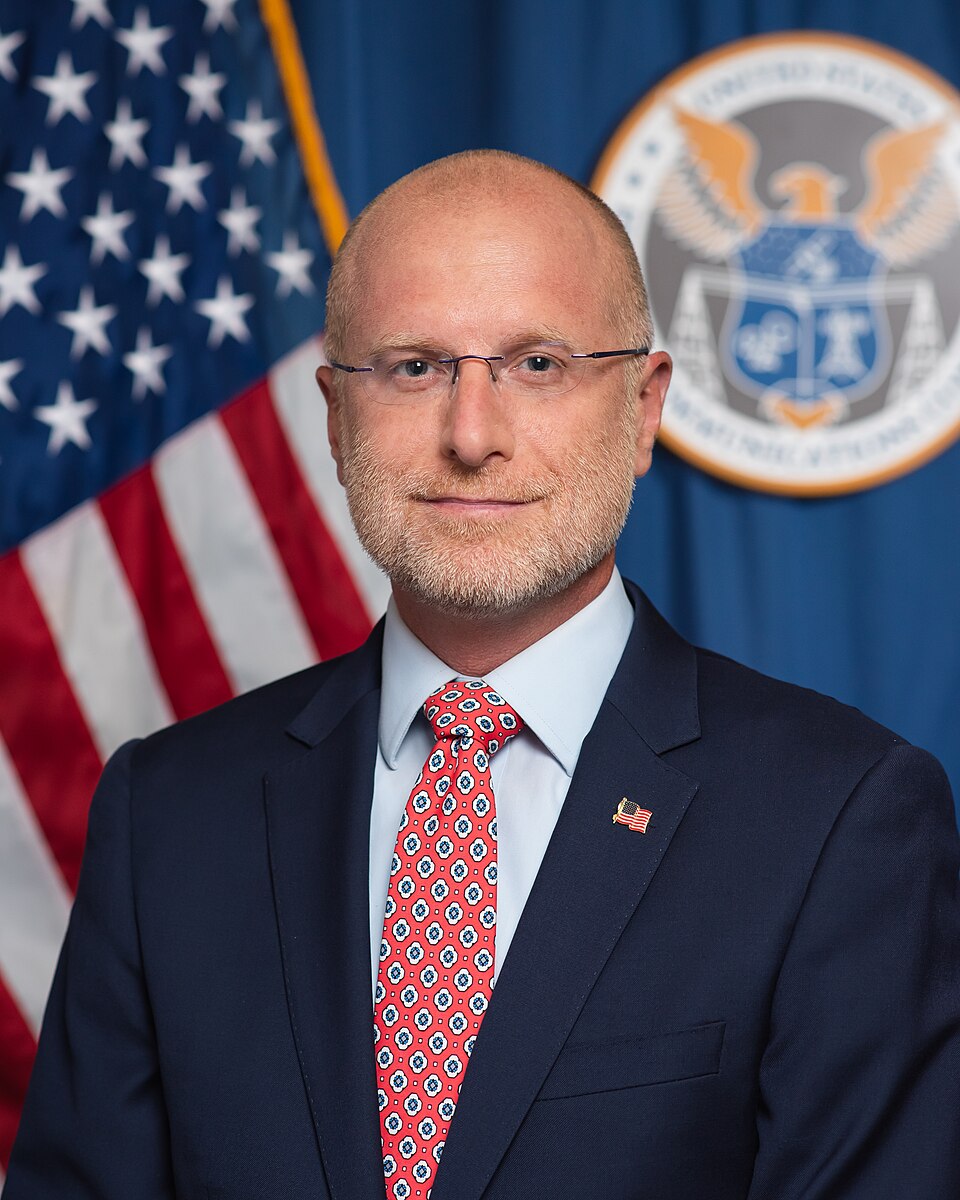
FCC Chair (designated January 20, 2025 by President Trump)
U.S. Solicitor General (confirmed April 2025)
Fifth Circuit Judge, U.S. Court of Appeals for the Fifth Circuit
Former FCC Chair (October 2021 to January 20, 2025)
Former Mississippi County, Missouri Sheriff (convicted November 2018)
Fifth Circuit Judge, U.S. Court of Appeals for the Fifth Circuit
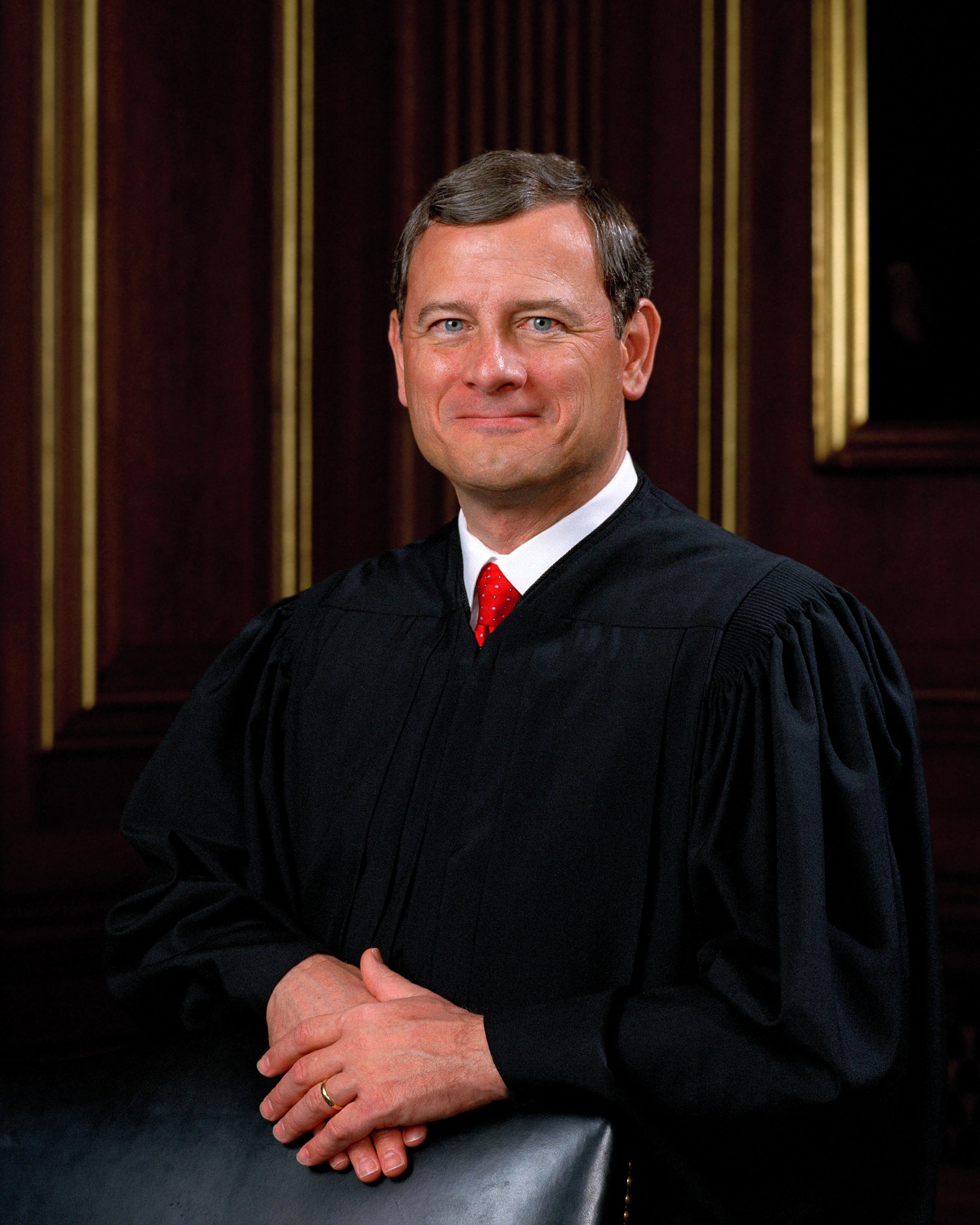
Chief Justice of the United States (2005-present)
Associate Justice, U.S. Supreme Court (2020-present)
research
Track the FCC v. AT&T ruling on SCOTUSblog
The Supreme Court will decide by late June 2026 whether agencies can fine companies without jury trials. SCOTUSblog posts real-time updates on oral arguments, briefs, and opinions in plain language. Following this case helps you understand how the ruling reshapes federal agency enforcement across more than two dozen agencies.
Visit scotusblog.com and search for FCC v. AT&T to find the case page with argument transcripts, briefs, and opinion updates. The ruling is expected by June 30, 2026.
civic action
Contact your senators about phone location data privacy
Congress created the FCC's enforcement process in 1934 and updated it in 1960. If the Supreme Court strikes it down, Congress can redesign it. Your senator has a voice in whether any legislative fix includes stronger privacy protections for location data.
Hello, I am [NAME], a constituent from [CITY/STATE]. I am calling about the Supreme Court case FCC v. AT&T, which the Court heard on April 21, 2026.
Key concerns:
Questions to ask:
Specific request: I am asking Senator [NAME] to co-sponsor legislation requiring law enforcement to obtain a warrant before accessing real-time cell phone location data from carriers or aggregators.
Question: What is the Senator's position on requiring warrants for law enforcement access to real-time location data?
Thank you for your time.
civic action
File a complaint with the FCC about carrier privacy violations
If you believe your carrier has shared your location data without proper consent, you can file a formal complaint with the FCC. Complaints create a public record and inform future enforcement priorities. The FCC's consumer complaint database is a primary tool investigators use to identify patterns of violations.
Visit consumercomplaints.fcc.gov to file an online complaint, or call 888-225-5322.
What to include in your complaint:
Your complaint goes on the public record and may inform future FCC enforcement priorities even if the Supreme Court changes how penalties are imposed.