April 6, 2026

Supreme Court cleared the way for Trump's DOJ to dismiss Steve Bannon's contempt of Congress conviction

House Select Committee
U.S. Court of Appeals for the D.C. Circuit
The Hill
The Hill
Congress.gov
+15

The court vacated the appeals ruling and sent the case back down, where U.S. Attorney Jeanine Pirro has a dismissal motion pending

Steve Bannon served as chief strategist for President Trump's first term and became one of the most prominent figures in the MAGA political movement after leaving the White House in 2017. The House Select Committee to Investigate the January 6th Attack on the United States Capitol, led by Rep. Liz Cheney (R-Wyo.) and Rep. Bennie Thompson (D-Miss.), subpoenaed Bannon in September 2021 for documents and testimony about his communications before and during January 6. Bannon refused to appear for his deposition and refused to produce any documents, claiming executive privilege on behalf of Trump.

A federal grand jury indicted Bannon on November 12, 2021, on two counts of contempt of Congress under , the statutory criminal contempt law. One count covered his failure to appear; the second covered his refusal to produce documents. A federal jury convicted him on both counts on July 22, 2022, after a trial before U.S. District Judge Carl Nichols — a Trump appointee — in Washington, D.C. but allowed him to remain free while he appealed.

. Bannon's central defense argument was that he couldn't be convicted of acting 'willfully' — as the statute requires — because he was following his attorney's advice and acting in good faith on Trump's assertion of executive privilege. The D.C. Circuit rejected that argument, finding that reliance on attorney advice doesn't eliminate willfulness under 2 U.S.C. § 192 when the underlying conduct was a deliberate refusal to comply.

Bannon began serving his four-month sentence in 2024 and was released that same year. The D.C. Circuit ruling meant his conviction stood as a matter of law and set precedent for how courts would evaluate 'willfulness' in future contempt of Congress cases.

The Trump administration took office in January 2025 and moved quickly to reverse the legal consequences facing Trump allies from the January 6 investigation. . DOJ attorneys did not contest Bannon's guilt or argue he was innocent. They argued that the administration had determined that continuing the prosecution was not in the public interest.

The problem was procedural. The D.C. Circuit had already issued a final ruling upholding the conviction and affirming the indictment. For the district court to dismiss the case, the appeals court ruling first had to be addressed. The DOJ could not simply dismiss an indictment that an appellate court had already sustained without the Supreme Court's involvement.

On April 6, 2026, . The Court vacated — wiped out — the D.C. Circuit ruling upholding Bannon's conviction and remanded the case back to the district court. No justice noted a dissent. The Court did not explain its reasoning or issue a written opinion. This type of order is called a GVR: grant certiorari, vacate the lower court ruling, and remand for further proceedings.

A GVR doesn't mean the Supreme Court agreed with Bannon or disagreed with the D.C. Circuit. It is a procedural clearing mechanism. By vacating the D.C. Circuit opinion, the Court removed the appellate ruling that was blocking Judge Nichols from acting on the DOJ's dismissal motion. The case went back to Nichols with the path legally clear for him to grant the government's motion to drop the charges.

The contempt of Congress statute (2 U.S.C. § 192) requires the executive branch to cooperate for it to work. When a committee votes to hold a witness in contempt, the full House or Senate must authorize a criminal referral to the DOJ. The attorney general then decides whether to present the referral to a grand jury. If the attorney general declines — as happened when Trump administration officials defied Democratic congressional subpoenas during Trump's first term — the statutory contempt mechanism produces no prosecution.

Congress has a separate, older contempt power called inherent contempt, which doesn't require DOJ involvement. Under inherent contempt, Congress can direct its sergeant-at-arms to physically detain a defiant witness, bring them before the full chamber, hold a proceeding, and impose fines or imprisonment. The Supreme Court recognized inherent contempt as constitutional in Anderson v. Dunn (1821). . Neither chamber has used it since.

The Bannon and Peter Navarro cases ran on parallel tracks through the courts, but received very different treatment from the Trump DOJ. for defying the same January 6 committee's subpoena. He served four months in prison in 2024. When Trump returned to office, the DOJ did not move to dismiss Navarro's case. As of the Bannon GVR order, Navarro was still pressing his own appeal — without DOJ support for dismissal.

Legal observers noted that Bannon and Trump had publicly reconciled after their falling-out following January 6. Navarro, by contrast, had more complicated political standing. The selective treatment of the two cases had no apparent legal basis in the contempt statute — which applies identically to both — and raised questions about whether DOJ enforcement decisions were being made on the basis of political loyalty rather than consistent legal principle.

The January 6 committee's subpoena authority itself derived from House Resolution 503, passed July 1, 2021, which established the select committee and gave it subpoena power. , covering witnesses from former Chief of Staff Mark Meadows to Proud Boys leader Enrique Tarrio. Bannon's subpoena covered his communications with Trump and others before and during January 6, including his statement on his podcast the night before the Capitol attack that 'all hell is going to break loose' on January 7.

The January 6 committee dissolved when Republicans took the House majority in January 2023. By that point, the criminal cases against Bannon and Navarro were already in the judicial pipeline. The new Republican majority did not renew or transfer the committee's investigative record to any successor body.

The Bannon GVR left the January 6 committee's historical investigative record intact — the committee's final report and evidence archive remain part of the congressional record — but stripped away the only legal consequence that followed from Bannon's defiance. A person who defied a congressional subpoena, was convicted by a jury, had his conviction affirmed by an appellate court, served his sentence, and then had his conviction vacated through a collaborative process between the administration he served and the Supreme Court, faced no remaining legal accountability.

that one unresolved question the Bannon case raised was whether a future Congress could respond to executive non-enforcement of contempt referrals by reviving inherent contempt — and whether a presidential pardon could reach inherent contempt penalties, which are imposed by Congress rather than the executive branch.

⚖️Justice📜Constitutional Law🏢Legislative Process📚Historical Precedent

People, bills, and sources

Steve Bannon

Former White House Chief Strategist; convicted January 6 defendant

Pam Bondi

Pam Bondi

U.S. Attorney General (confirmed February 2025)

Carl Nichols

U.S. District Judge, District of Columbia (Trump appointee, confirmed 2019)

Peter Navarro

Former White House Trade Adviser; convicted January 6 defendant

Bennie Thompson

U.S. Representative (D-Miss.); Chair, House Select Committee on January 6

Brad Garcia

Judge, United States Court of Appeals for the D.C. Circuit (Biden appointee, confirmed 2023)

Cornelia Pillard

Judge, United States Court of Appeals for the D.C. Circuit (Obama appointee, confirmed 2013)

Justin Walker

Judge, United States Court of Appeals for the D.C. Circuit (Trump appointee, confirmed 2020)

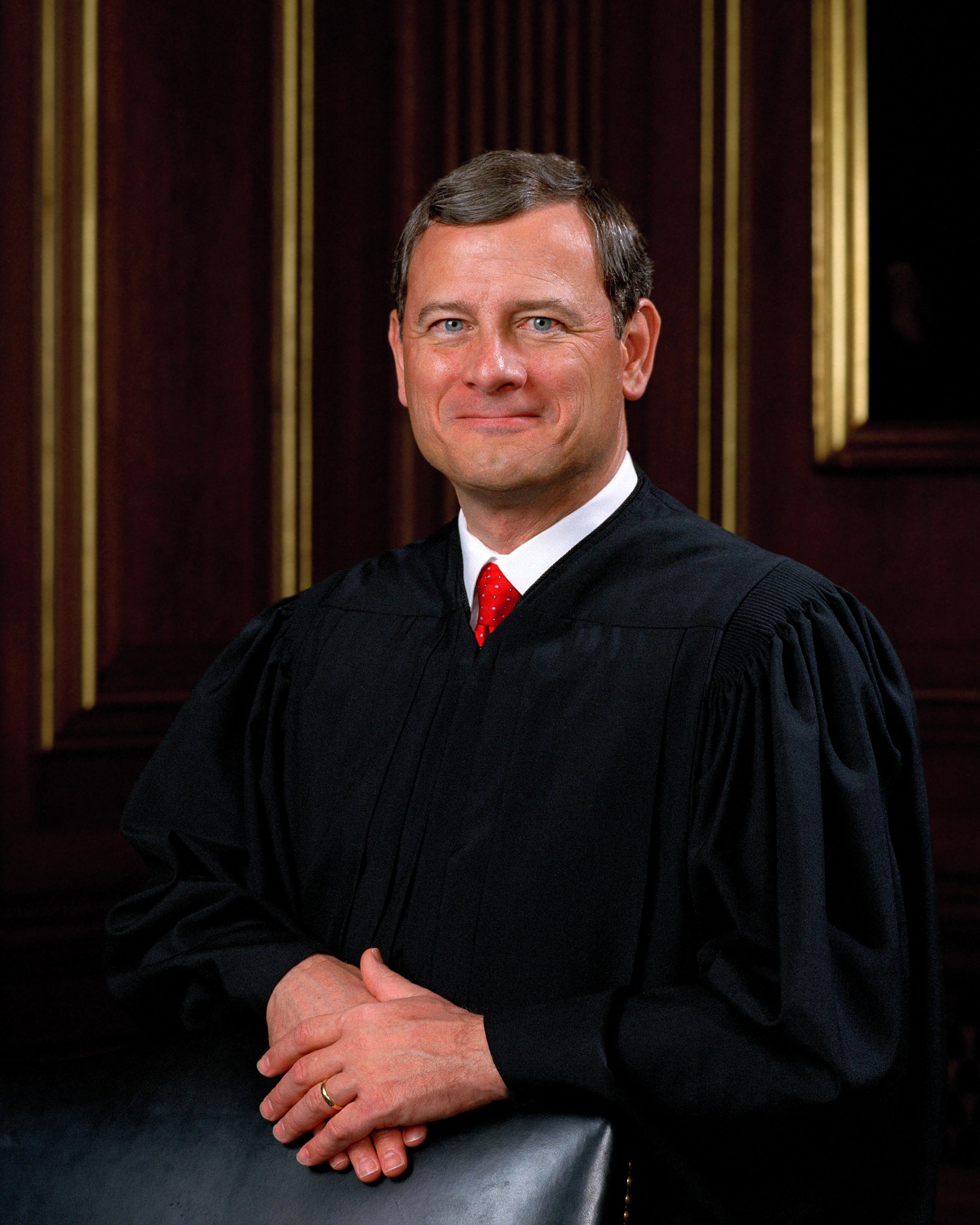
John Roberts

John Roberts

Chief Justice, United States Supreme Court (W. Bush appointee, confirmed 2005)

Clarence Thomas

Associate Justice, United States Supreme Court (H.W. Bush appointee, confirmed 1991)

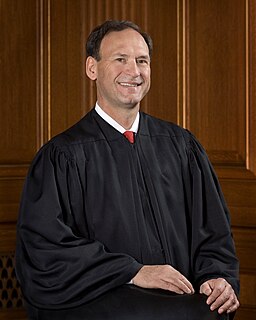
Samuel Alito

Samuel Alito

Associate Justice, United States Supreme Court (W. Bush appointee, confirmed 2006)

Neil Gorsuch

Associate Justice, United States Supreme Court (Trump appointee, confirmed 2017)

Brett Kavanaugh

Associate Justice, United States Supreme Court (Trump appointee, confirmed 2018)

Amy Coney Barrett

Associate Justice, United States Supreme Court (Trump appointee, confirmed 2020)

Sonia Sotomayor

Associate Justice, United States Supreme Court (Obama appointee, confirmed 2009)

Elena Kagan

Associate Justice, United States Supreme Court (Obama appointee, confirmed 2010)

Ketanji Brown Jackson

Associate Justice, United States Supreme Court (Biden appointee, confirmed 2022)

What you can do

1

civic action

Contact your House representative about restoring congressional subpoena enforcement

Congress can pass legislation strengthening contempt enforcement, including giving courts independent authority to compel compliance without DOJ involvement. Your representative can co-sponsor or support such legislation.

Hi, my name is [Name] and I'm a constituent from [City]. I'm calling about the Supreme Court's decision to vacate Steve Bannon's contempt of Congress conviction. I'm concerned that the DOJ's refusal to enforce a congressional subpoena conviction sets a dangerous precedent for oversight. I'd like to know if Representative [Name] supports legislation to give courts independent authority to enforce congressional subpoenas without DOJ cooperation. Can you tell me the representative's current position on this?

2

research

Read the January 6 committee's final report

The January 6 committee's 845-page final report and its evidence archive remain part of the permanent congressional record, even though the committee dissolved in January 2023. The report documents in detail what each subpoenaed witness produced, what they withheld, and what Bannon's specific refusal covered — the communications that could have shown coordination between Trump's inner circle and the rally organizers. The GVR order erased the legal consequence of Bannon's defiance; the historical record it was meant to build remains public.

This is a research action to read the January 6 committee's final report. To access it:\n\nStep 1: The 845-page report is available at the URL in this insight — january6th.house.gov — or search "January 6 committee final report" at govinfo.gov for the official GPO version\nStep 2: The report's appendices include individual summaries of every subpoena issued, what was produced, and what witnesses refused\nStep 3: To understand what Bannon's refusal covered: search "Bannon" in the PDF — the committee documented his specific communications with Trump before January 6, including his "all hell is going to break loose" podcast statement on the night of January 5\nStep 4: Cross-reference the committee's findings with the Supreme Court's April 6, 2026 GVR order, which vacated the D.C. Circuit ruling that had upheld Bannon's contempt conviction\n\nKey context:\n- The committee issued more than 100 subpoenas and documented testimony and documents from over 1,000 witnesses\n- Bannon refused all testimony and document production in September 2021\n- His conviction has now been cleared through a DOJ dismissal motion after the Supreme Court's GVR

3

civic action

Track whether Judge Nichols grants the DOJ dismissal motion

The DOJ's dismissal motion is the last procedural step before Bannon's contempt conviction is formally erased. Judge Nichols — the Trump-appointed judge who presided over the original trial — must still formally act on the motion; the Supreme Court's GVR order only cleared the procedural path. CourtListener at courtlistener.com provides free access to D.C. federal district court filings and will notify you by email when new documents are filed in the case.

This is a court-tracking research action. To monitor whether Judge Carl Nichols grants the DOJ dismissal motion in United States v. Bannon:\n\nStep 1: Go to pacer.uscourts.gov — the case is Criminal Case No. 1:21-cr-00670 in the U.S. District Court for the District of Columbia\nStep 2: Search by case number. Watch for: a scheduling order setting a date for argument on the dismissal motion; any amicus or opposition filings from public interest groups; and Judge Nichols' final order granting or denying the motion\nStep 3: The Supreme Court's GVR order was issued April 6, 2026 — Nichols will typically act within weeks of receiving the mandate from the appeals court\nStep 4: CourtListener at courtlistener.com provides free access to D.C. district court filings without a PACER account\n\nKey facts:\n- DOJ filed the dismissal motion in February 2026\n- The April 6 GVR removed the D.C. Circuit ruling that had been blocking Nichols from acting\n- Bannon served four months in prison in 2024; the DOJ is not contesting his guilt, only arguing it's not in the public interest to continue the prosecution