April 10, 2026
Judge rules Hegseth violated court order blocking press from Pentagon
Defense Secretary must comply with court orders on press access
📜Constitutional Law🛡️National Security📰Media Literacy🏛️Government
April 10, 2026
Defense Secretary must comply with court orders on press access
On April 10, 2026, U.S. District Judge Paul L. Friedman ruled that Defense Secretary  Pete Hegseth and the Department of Defense violated his March 20 court order restoring press access to the Pentagon building. Friedman, a senior federal judge appointed by President Bill Clinton on June 16, 1994, found that Pentagon leadership deliberately circumvented his earlier constitutional ruling by implementing a revised policy that maintained the same restrictive effect while using different justifications.
Writing in his decision, Friedman stated that "the Department cannot simply reinstate an unlawful policy under the guise of taking 'new' action and expect the court to look the other way," signaling that the Trump administration's attempt to evade judicial authority constituted potential .
Friedman's April 10 opinion directly condemned Hegseth's strategy to maintain control over Pentagon press access after losing in court. The judge emphasized that "suppression of political speech is the mark of an autocracy, not a democracy," highlighting that the Pentagon's actions violated fundamental constitutional principles protecting a free press.
Friedman wrote that the attempt by the Secretary of Defense "to dictate the information received by the American people, to control the message so that the public hears and sees only what the Secretary and the Trump Administration want them to hear and see" exceeded constitutional authority. By ordering Pentagon officials to submit a sworn compliance declaration by April 16, 2026, Friedman made explicit that continued defiance would trigger contempt of court sanctions.
In October 2025, Defense Secretary Pete Hegseth imposed a 21-page Pentagon press rulebook that required journalists to obtain prior Department of Defense approval before gathering or publishing any information, including unclassified material previously available without authorization. The rulebook mandated that all news organizations pledge not to seek unauthorized information and established physical access restrictions that required military escorts for reporters entering many Pentagon facilities.
The policy created a two-week deadline—by October 14, 2025—for news organizations to accept the new terms or forfeit their Pentagon press credentials entirely.
Major news outlets including chose to abandon their Pentagon press passes rather than accept restrictions they viewed as unconstitutional government control over editorial decision-making. Only the outlet OANN agreed to accept Hegseth's restrictive terms.
The walkout by established news organizations reflected industry recognition that the policy crossed constitutional boundaries. The October 2025 rulebook required written authorization before reporters could even gather unclassified information—an unprecedented demand that attempted to vest Pentagon leadership with veto power over what American citizens learned about military and defense policy.
In response to Judge Friedman's March 20 ruling, Defense Secretary Pete Hegseth unveiled a revised Pentagon press policy on March 23, 2026, that closed the Correspondents' Corridor—a workspace where journalists had operated inside the Pentagon building for decades—and moved all reporters to an external annex facility.
Under the new policy, any reporter requiring access to the Pentagon building for press conferences or interviews must be accompanied by a military escort at all times. Friedman found that this revised policy achieved the same unconstitutional result as the prior restrictions by creating insurmountable practical barriers to independent newsgathering and reporting.
The eliminated decades of institutional practice that had allowed reporters to move freely through Pentagon corridors, encounter defense officials informally, and develop the relationships necessary for accountability journalism.
Judge Friedman emphasized in his April 10 ruling that Hegseth's team engaged in deliberate circumvention of judicial authority by substituting one unconstitutional restriction with another. The as "a clear violation of the letter and spirit" of Friedman's March 20 constitutional ruling.
The New York Times filed its lawsuit against the Department of Defense and Secretary Hegseth in December 2025, challenging the October 2025 press policy as an unconstitutional restriction on First Amendment rights and due process protections under the Fifth Amendment.
Judge Paul Friedman heard the case in the U.S. District Court for the District of Columbia and ruled in favor of The Times on March 20, 2026, finding that the Pentagon's policy violated the Constitution by conditioning press access on political viewpoint rather than legitimate security concerns.
Friedman's March 20 decision struck down provisions treating Pentagon press credentials as a "privilege" that could be granted or denied at government discretion, instead recognizing that credentialed journalists have constitutional rights when the government creates a designated space for press newsgathering. The ruling established that press credentials for established government spaces constitute a limited open forum where or retaliate against unfavorable coverage.
The March 20 ruling also established that the Pentagon policy violated the Fifth Amendment because it failed to provide clear standards governing when a journalist's press credential could be denied, leaving decisions entirely to the discretion of Pentagon officials with no objective criteria.
Judge Friedman found that the Pentagon policy constituted illegal "viewpoint discrimination"—a heightened First Amendment violation that occurs when government restricts speech based on the political ideology, critical perspective, or disfavored message expressed by the speaker. Viewpoint discrimination differs from content-neutral restrictions and represents one of the most constitutionally prohibited forms of government speech control.
Friedman examined internal Pentagon communications and found "undisputed evidence" that Defense Secretary Hegseth and other Pentagon leadership actively discussed which news outlets to exclude based on whether their reporting was favorable or critical to the Trump administration.
Friedman's decision stated that the policy was "clearly designed to weed out 'disfavored journalists' and replace them with those 'on board and willing to serve'" the administration, calling this "viewpoint discrimination, full stop." The ruling emphasized that whose coverage the Pentagon considered unfavorable demonstrated the policy's true purpose was political retaliation, not national security.
By documenting that Pentagon leadership had expressed open hostility to "mainstream media" while favoring supportive outlets, Judge Friedman established that the policy's facially neutral restrictions on "unauthorized information" actually functioned as a mechanism for excluding disfavored viewpoints.
Judge Friedman's April 10 decision set in motion potential contempt of court charges against the Pentagon for willful violation of his March 20 order. Contempt of court is the judicial power to punish government officials and agencies who refuse to comply with court orders, and it constitutes one of the judiciary's most important tools for enforcing the separation of powers.
Friedman ordered a Pentagon official to submit a sworn compliance declaration by April 16, 2026, certifying whether the Pentagon had actually restored the Correspondents' Corridor and discontinued requiring military escorts for reporters. This deadline established a measurable test of Pentagon obedience: either comply fully with the March 20 order by April 16, or face contempt sanctions.
The Freedom of the Press Foundation and the Reporters Committee for Freedom of the Press (RCFP), which filed friend-of-the-court briefs supporting The New York Times throughout the litigation, as the appropriate remedy for the Pentagon's willful defiance.
The contempt threat is significant because it signals that judicial authority itself is at stake: if courts cannot enforce their own orders, the separation of powers collapses and the executive branch becomes effectively unchecked. The Pentagon announced it would , but the appeal did not automatically stay Friedman's contempt threat or the April 16 deadline.
The Pentagon's Correspondents' Corridor represents a decades-long institutional practice where vetted, credentialed journalists from major news organizations maintained dedicated workspace inside the Pentagon building to cover military operations and defense policy. The Corridor allowed reporters to move relatively freely through Pentagon corridors, encounter defense officials and military personnel in informal settings, and conduct the spontaneous conversations that generate accountability journalism.
This access model reflected an implicit constitutional bargain: the Pentagon acknowledged that free press coverage of defense and military matters served the public interest, and in exchange, credentialed journalists agreed to follow security protocols and respect classified information restrictions.
Hegseth's decision to eliminate workspace and require military escorts for all Pentagon building access represented a sharp departure from historical Pentagon practice and reflected a deliberate choice to make accountability journalism about defense matters more difficult.
Judge Friedman's preservation of the Correspondents' Corridor and elimination of escort requirements for reporters working in the building represented the court's recognition that informal access to Pentagon officials—not just formal press conferences—is essential to press accountability over defense and military policy. The closure of the Corridor was not a security measure but rather the Pentagon's way of implementing viewpoint discrimination through physical exclusion.
Federal judge
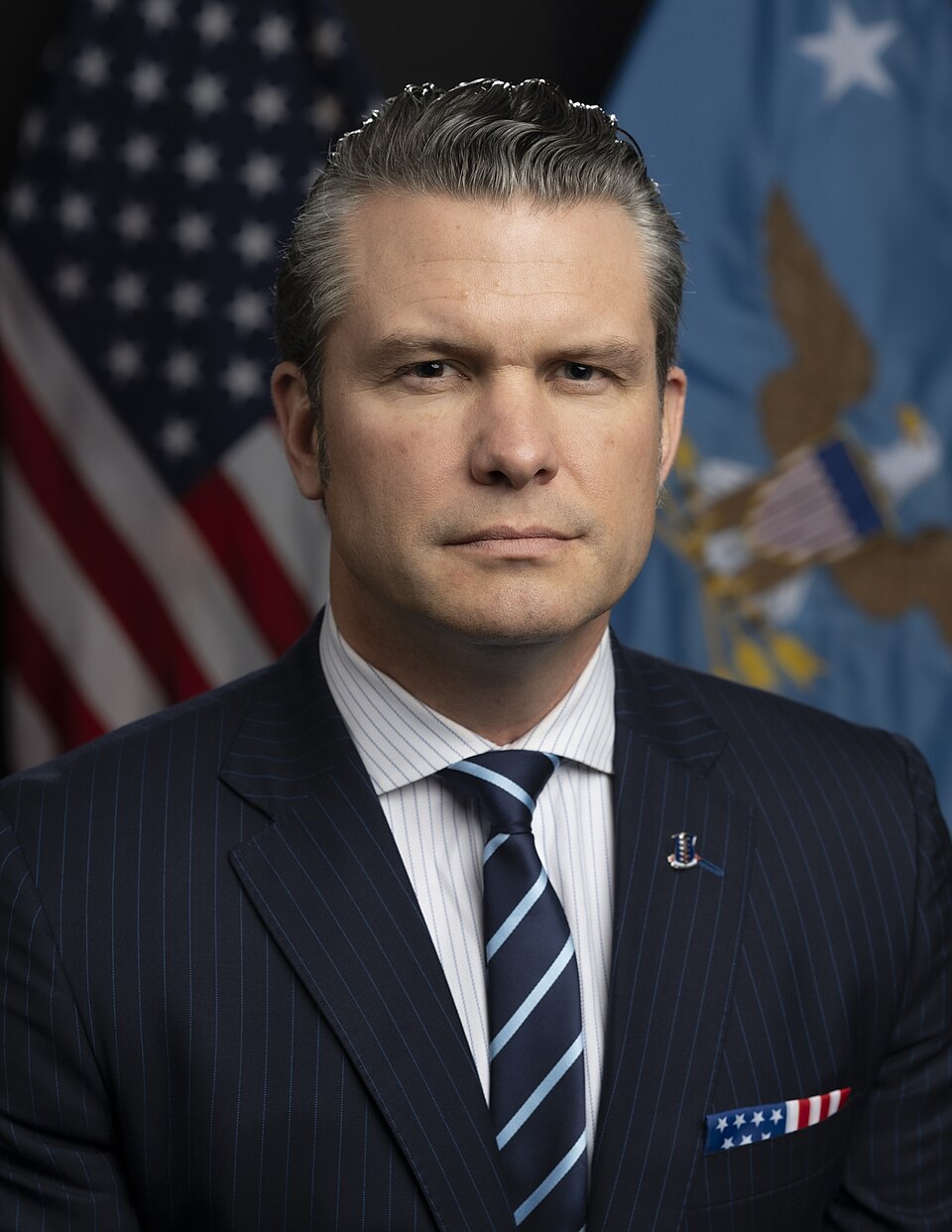
Defense Secretary
Pentagon spokesman and Assistant Secretary
Lawyer for The New York Times
OANN president
News organization and plaintiff
Major broadcast and cable news organizations
News organization
News organization
News organization
News organization
Right-wing outlets and activist organizations
Press freedom legal organization
Press freedom advocacy organization
Journalist professional organization
Journalist professional organization
Legal accountability
Track the Pentagon press access case through the appellate courts
The Pentagon said it will appeal Friedman's April 10 ruling to the U.S. Court of Appeals for the District of Columbia Circuit. That court could overturn Friedman's decision or let it stand. This case will likely go on for months. Tracking when decisions come down helps you see how courts handle government attempts to work around court orders.
Legislative advocacy
Contact your congressional representative about press freedom in government
Congress can pass laws protecting reporter access to government buildings and information. The Pentagon case shows that relying only on court rulings isn't enough when executives keep trying workarounds. You can advocate for laws making clear that reporters have a right to be in government buildings and that press restrictions based on editorial viewpoint are illegal.
Use House or Senate directory at house.gov or senate.gov to find contact info
Organizational support
Support organizations defending press freedom like the Reporters Committee for Freedom of the Press
Organizations like the RCFP (reporters-committee.org) and the Freedom of the Press Foundation file legal briefs in cases like this one. They fought to make sure courts understand why press access matters. You can donate, volunteer, or join their mailing list to stay updated on press freedom cases.
Visit reporters-committee.org or contact info on the site