April 20, 2026
DeSantis calls special session to redraw Florida congressional maps

Florida Republicans scramble for three more seats mid-decade
🗳️Elections📊Electoral Systems✊Civil Rights📜Constitutional Law🏛️Government
April 20, 2026
Florida Republicans scramble for three more seats mid-decade
Governor Ron DeSantis filed a , calling a special legislative session to redraw Florida's 28 congressional districts. The session was originally set for April 20-24 but DeSantis and expanded the agenda to include artificial intelligence and vaccine mandates.
The redistricting goal is to flip Florida's existing congressional map. The current Republican-drawn map from 2022 gives the GOP a 20-8 seat advantage over Democrats in the state's 28 House seats. Republican Party of Florida Chair Evan Power .
Florida voters approved the to the state constitution in November 2010 with 63.2 percent in favor. Amendment 5 covers legislative districts; Amendment 6 covers congressional districts. Both share an identical prohibition: no redistricting plan or individual district may be drawn "with the intent to favor or disfavor a political party or an incumbent."
The amendment was a direct response to decades of partisan gerrymandering by both parties in Tallahassee. Sponsors collected more than 1.5 million signatures to place it on the ballot. Unlike most anti-gerrymandering measures, it put the constitutional prohibition directly in voters' hands rather than delegating enforcement to a commission.
On February 9, 2012, the League of Women Voters of Florida, Common Cause, the NAACP, and individual voters , alleging that districts 5, 10, 13, and 14 were intentionally drawn to favor Republicans in violation of the Fair Districts Amendment.
The Florida Supreme Court approved a remedial map on December 2, 2015, in , and ordered it in force for the 2016 elections. The court found the 2012 maps violated the Fair Districts Amendment because legislators drew them with partisan intent. DeSantis's 2026 special session attempts the same type of partisan mid-decade remap the court already struck down.
Republicans defend the special session by arguing new maps are needed to protect minority voting rights under , which bars voting procedures that discriminate by race. The theory is that courts could order Florida to create more majority-minority districts, so the legislature should act first.
Voting rights groups reject that framing. The 2022 DeSantis-backed map already reduced Florida's Black-majority congressional districts from three to two. NAACP president Derrick Johnson said reducing minority-majority districts harms Black voters by diluting their electoral power. League of Women Voters of Florida president Jessica Lowe-Minor called the special session a inconsistent with any genuine voting rights rationale.
The legal constraint Republicans most want to remove depends on , a case before the U.S. Supreme Court asking whether Louisiana's congressional map, which created two majority-Black districts to comply with Section 2, itself violates the Fourteenth and Fifteenth Amendments as racial gerrymandering. The Court heard a first round of oral arguments in March 2025, then took the rare step of ordering reargument in fall 2025.
On April 6, 2026, DeSantis stated publicly: If the Court strikes down or severely limits Section 2, Republicans would lose the voting rights constraint that has historically limited how aggressively they can reduce minority voting districts. No ruling had been issued as of the start of the special session.
Texas carried out the , engineered by House Majority Leader Tom DeLay after Republicans took control of the Texas legislature. DeLay's maps converted a 17-15 Democratic congressional advantage into a 21-11 Republican advantage after the 2004 elections.
The U.S. Supreme Court upheld the maps in , ruling that mid-decade redistricting isn't categorically prohibited. But the Court found one district diluted Latino voting power in violation of the Voting Rights Act and required Texas to redraw it. Florida Republicans cite the Texas case as precedent that mid-decade redistricting is legal, but voting rights attorneys note the Court's warning about using partisan redistricting to harm minority voters.
Speaker of the Florida House Daniel Perez has clashed with DeSantis over both the timeline and approach. A Perez staffer told reporters on April 14 that , six days before the session was originally set to begin.
Three sitting Republican U.S. House members, Daniel Webster, Mario Diaz-Balart, and Greg Steube, publicly warned against the push. Webster said outright: "Don't do it." Diaz-Balart told the aggressive approach risked producing a "dummymander" by packing Republican voters so tightly into a few districts that it reduces the total number of Republican-held seats. Senate President Ben Albritton has been more aligned with DeSantis and supported pushing the session forward.
The term "dummymander" refers to a partisan gerrymander that backfires by making existing seats more vulnerable. GOP consultant Alex Alvarado warned that pursuing five additional Republican seats could put three existing Republican incumbents at competitive risk. Florida's 28 congressional seats make it the in the country.
Diaz-Balart, whose Miami-area district includes a large Cuban-American population, told colleagues that drawing lines carelessly in South Florida could cost Republicans one of their most reliable seats. Republicans held the House by a thin margin heading into 2026, meaning losing even one or two Florida incumbents could shift the majority.
An found 56 percent of Florida voters opposed the special session redistricting, while only 28 percent supported it, with 16 percent undecided.
Public opposition hasn't slowed DeSantis. On April 14, he said the redistricting The League of Women Voters and the NAACP have said they'll challenge any map produced by the session in court. Florida Secretary of State Cord Byrd moved the campaign qualifying deadline to accommodate the session's new schedule, signaling the administration intends to implement new maps for the 2026 cycle regardless of litigation.
Governor of Florida
Speaker of the Florida House of Representatives
President of the Florida Senate
President of the League of Women Voters of Florida
U.S. Representative (R-Florida, Orlando area)
U.S. Representative (R-Florida, Miami area)
Chair of the Republican Party of Florida
Secretary of State of Florida
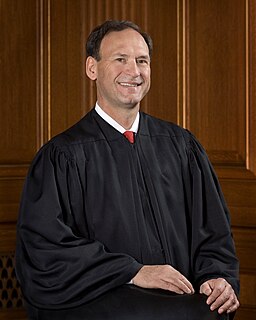
Associate Justice of the U.S. Supreme Court
President and CEO of the NAACP
civic action
Contact your state representative about the special session
Tell your state representative and senator whether you support or oppose the April 20-24 special session. Remind them that the Fair Districts Amendment banned maps drawn for partisan advantage.
Hello, I am [NAME], a constituent from [CITY/COUNTY]. I am calling about the special legislative session on congressional redistricting.
Key concerns:
Specific request: I am asking my representative to vote against any map that violates the Fair Districts Amendment.
Question: What is my representative's position on mid-decade redistricting?
Thank you for your time.
research
Track the special session proceedings online
The Florida Legislature livestreams committee hearings and floor debates. Watch the redistricting committee hearings April 20-23 to see what maps are proposed and understand where your district might change.
research
Learn how the Voting Rights Act Section 2 case affects your district
The Louisiana v. Callais case before the Supreme Court will determine whether Section 2 of the Voting Rights Act violates the Equal Protection Clause. If the Court rules against Section 2, Republicans will have more legal freedom to draw maps that dilute minority voting power.