March 10, 2026
DC Bar files ethics charges against DOJ''s Ed Martin

The ethics complaint stems from Martin attempts to influence university hiring practices over DEI policies
⚖️Justice📜Constitutional Law🔐Ethics
March 10, 2026
The ethics complaint stems from Martin attempts to influence university hiring practices over DEI policies
"Ed Martin's letter to Georgetown Law on February 17, 2025 didn't ask questions — it announced consequences. Martin, then serving as interim U.S. attorney for D.C., told Georgetown's dean that a whistleblower had claimed the school was teaching DEI. Without waiting for a response, he imposed sanctions: his office would no longer employ Georgetown students as fellows, interns, or employees. The letter dovetailed with a Trump executive order calling for the elimination of DEI programs across the federal government.\n\nDC Bar disciplinary counsel Hamilton 'Phil' Fox III's complaint identified this as a textbook violation of the First Amendment. 'Acting in his official capacity and speaking on behalf of the government,' Fox wrote, 'he used coercion to punish or suppress a disfavored viewpoint, the teaching and promotion of DEI.' The filing further accused Martin of demanding that Georgetown 'relinquish its free speech and religious rights in order to obtain a benefit, employment opportunities for its students.' The 'benefit' at issue was access to a federal prosecutor's office internship program — a standard career pipeline for law students."
"Georgetown Law's response invoked both the Constitution and the school's religious identity. Dean William Treanor, a former federal judge and constitutional law scholar, wrote back reminding Martin that Georgetown is a Catholic and Jesuit institution and that the First Amendment 'guarantees that the government cannot direct what Georgetown and its faculty teach and how to teach it.' Treanor's letter framed Martin's demand not merely as a legal violation but as an attack on institutional religious and academic freedom — a dual protection that would make the constitutional case even harder for the government to defend.\n\nThe Supreme Court has repeatedly struck down government attempts to condition benefits on the surrender of First Amendment rights. In Rust v. Sullivan (1991) and Agency for International Development v. Alliance for Open Society International (2013), the Court established that the government cannot attach ideological compliance conditions to the receipt of public benefits. Georgetown's legal team argued Martin's letter was exactly this kind of unconstitutional condition — and the DC Bar's disciplinary counsel agreed."
"The second count in the ethics complaint involves Martin's conduct after he learned he was under bar investigation. Rather than respond through proper legal channels, Martin sent unauthorized ex parte letters directly to judges of the DC Court of Appeals — copying the White House counsel's office. Ex parte communications with judges by one party in a proceeding, without notifying the other party, violate Rule 3.5 of the Model Rules of Professional Conduct. They are prohibited because they allow one-sided influence over judicial decision-making outside any official record.\n\nBy copying the White House counsel's office on the letters, Martin effectively signaled to the judges that the executive branch was aware of and involved in his disciplinary defense — a form of institutional pressure that legal ethics experts described as an attempt to politicize what is supposed to be an independent professional accountability process. The DC Bar called the letters 'unauthorized,' and the complaint treats them as a second, distinct ethics violation independent of the Georgetown demand."
"Ed Martin's trajectory inside the Trump administration illustrates how the DOJ has been used as a political instrument in ways that created legal exposure. Martin became the interim U.S. attorney for D.C. on Inauguration Day, January 20, 2025, one of the first personnel moves of the second term. He was simultaneously a prominent defender of January 6 defendants — having advocated for pardons and leniency — and an aggressive enforcer of Trump's anti-DEI executive orders. His hybrid role drew immediate scrutiny from Senate Republicans, and when it became clear he could not win the votes needed for confirmation, he was replaced as U.S. attorney by Jeanine Pirro.\n\nInstead of being removed from DOJ, Martin was given two new roles: pardon attorney — a position overseeing the formal clemency pipeline — and chief of Attorney General  Pam Bondi's Weaponization Working Group, which was established to investigate what the administration called weaponization of the justice system against Trump allies. He was subsequently stripped of the Weaponization Working Group title, but remained at DOJ as pardon attorney when the ethics complaint was filed."
"Attorney General Pam Bondi and Deputy AG  Todd Blanche's responses to the ethics complaint were notable for what they didn't do: they didn't address the substance of the allegations at all. Instead, DOJ issued a statement calling the DC Bar 'partisan' and accusing it of refusing to investigate ethical violations by Obama and Biden administration attorneys. Blanche posted on social media that the 'DC Bar is such a blatantly Democrat-run political organization' and added 'Thank God I'm not a member, and trust me, I never will be.' The DOJ response framed the bar's enforcement as a political attack rather than as an independent accountability mechanism.\n\nThe DOJ's response also signals a deliberate strategy: Bondi has centralized oversight of attorney discipline within her office, including review of bar investigations involving DOJ lawyers. Critics argue this creates a structural conflict of interest — the agency being investigated controls the review process for disciplinary matters involving its own attorneys. The Hill reported that a Maryland grand jury was separately investigating Martin for potentially improper use of outside figures in probes targeting Trump's political adversaries."
"The Martin case sits at the intersection of two constitutional principles that have defined academic freedom jurisprudence for decades. The government's power to set conditions on employment programs — including prosecutor internships — is real but bounded. Courts have consistently held that the government cannot use that power to require ideological compliance as the price of participation. The relevant precedent stretches from Keyishian v. Board of Regents (1967), in which the Supreme Court struck down New York's anti-Communist loyalty oath for faculty, to more recent cases on compelled speech and viewpoint discrimination.\n\nMartin's demand that Georgetown change what it teaches as the price for student employment access is legally distinguishable from a decision not to hire from a school for neutral operational reasons. The DC Bar's complaint argues that the threat was made in official capacity, for explicitly ideological reasons, and before any response was even solicited — which removes the plausible defense that the government was merely exercising procurement discretion. Bar disciplinary proceedings are not criminal trials; Martin does not face jail time. But he could face suspension or disbarment — consequences that would end his legal career."
DOJ Pardon Attorney; former Interim U.S. Attorney, D.C.
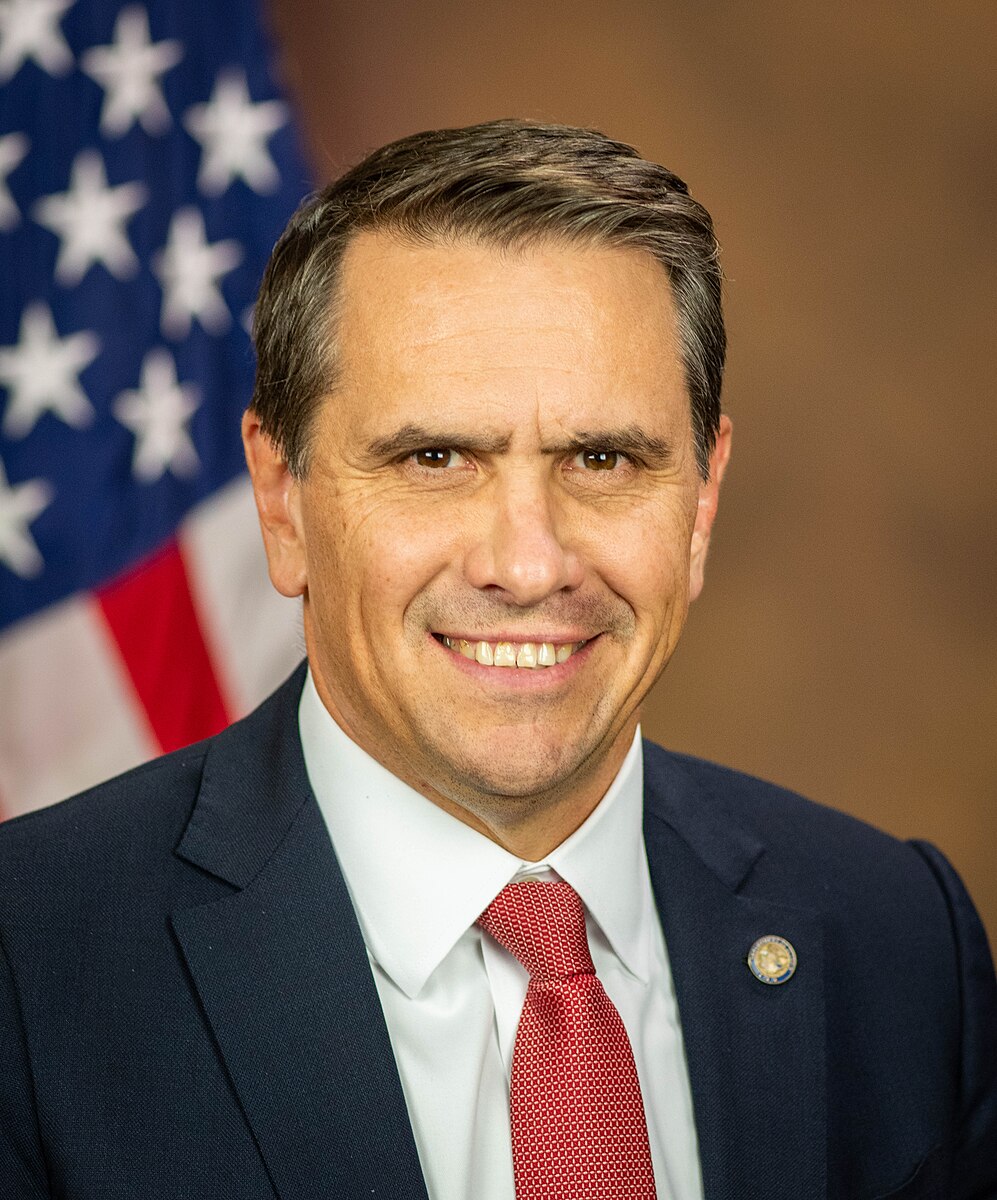
Deputy Attorney General

Attorney General
Dean, Georgetown University Law Center
Disciplinary Counsel, District of Columbia Bar
research
Track the Ed Martin bar proceeding on DC Bar's public docket
Bar discipline proceedings are public and searchable. Following this case teaches you how attorney ethics oversight works, what standards apply to government lawyers, and whether professional accountability survives political pressure.
Go to dcbar.org and navigate to Attorney Discipline, then Public Discipline. Search for Ed Martin. Review the formal complaint to understand the two counts. Check back monthly — bar proceedings move slowly but the public record is detailed and useful for understanding what government attorneys are and are not permitted to do.
civic action
Contact your senator about political interference in DOJ attorney oversight
AG Bondi's move to give political appointees more authority over bar discipline review creates a structural conflict of interest. Demand your senator ask the Senate Judiciary Committee to investigate whether DOJ is using its power to undermine independent attorney oversight.
Hello, I am [NAME], a constituent from [CITY/STATE]. I am calling about DOJ political appointees interfering with independent attorney oversight.
Key concerns:
Questions to ask:
Specific request: I am asking Senator [NAME] to request that the Senate Judiciary Committee examine DOJ's recent changes to bar discipline oversight and their effect on accountability.
Question: What is the Senator's position on maintaining independent oversight of government attorneys?
Thank you for your time.
research
Read RCFP guidance on government coercion of academic institutions
The Reporters Committee tracks cases where government actors use procurement and employment leverage to suppress speech at universities and media institutions. Their resources explain the First Amendment framework at stake when government officials threaten institutions over their content.
Visit rcfp.org and search for coverage of government coercion of universities and academic freedom. Read the ACLU's resources on unconstitutional conditions and academic freedom — these explain why the government can't condition federal benefits on changing what you teach. Compare the Martin case to historical examples of government pressure on universities.