April 13, 2026
US Navy begins blockade of Iranian ports after peace talks fail
Naval blockade of Iran begins without congressional authorization
🌍Foreign Policy🛡️National Security📜Constitutional Law🏢Legislative Process💰Economy
April 13, 2026
Naval blockade of Iran begins without congressional authorization
The United States Central Command (CENTCOM) began enforcing a naval blockade of Iranian ports at 10 a.m. ET on April 13, 2026. The blockade applies to all maritime traffic — regardless of the vessel's flag or nation — entering or departing Iranian ports along the Arabian Gulf and Gulf of Oman. CENTCOM issued a Notice to Mariners directing vessels operating in the Gulf of Oman and Strait of Hormuz approaches to contact U.S. forces on bridge-to-bridge channel 16 before proceeding.
The blockade does not close the Strait of Hormuz entirely. Ships bound for non-Iranian ports may still transit the strait — but any vessel headed to or from an Iranian port will be boarded or turned back. The USS Gerald R. Ford and USS Abraham Lincoln carrier strike groups, each with three guided-missile destroyers, are enforcing the operation. The UK and at least two other allied nations are contributing minesweepers to clear the strait for commercial use.
The peace talks that triggered the blockade announcement collapsed in Islamabad, Pakistan, on April 12. Vice President JD Vance, Trump envoy  Steve Witkoff, and Jared Kushner led a U.S. delegation through a 21-hour direct negotiating session with a 71-member Iranian team led by Parliament Speaker Mohammad-Bagher Ghalibaf. The talks failed after Iran refused to commit to never developing a nuclear weapon — the core U.S. demand — and neither side could agree on who would control Hormuz transit or in what order sanctions relief and military de-escalation would be sequenced.
Vance left Pakistan saying 'we have not reached an agreement.' Trump responded Sunday morning by sharing a Truth Social article suggesting a 'full naval blockade' of Iran. CENTCOM made the blockade official hours later.
Under international law, a naval blockade is an act of war. The 1856 Declaration of Paris and subsequent customary international law require that a blockade be declared, impartially applied, and effective to be considered legal. Iran's armed forces immediately declared the U.S. blockade 'illegal and an act of piracy.' The IRGC specifically warned that any U.S. military vessel entering the Strait of Hormuz would be 'considered a violation of the ceasefire and will be met with severe force.'
The two-week ceasefire declared April 7 is still nominally in effect, expiring around April 22. But both sides are now characterizing each other's actions as ceasefire violations: Iran says the U.S. blockade is an unlawful act of war; the U.S. says Iran's prior control over Hormuz justified the response. The ceasefire's terms were never publicly released in full.
The U.S. Constitution gives Congress — not the president — the power to declare war (Article I, Section 8). Congress has not declared war on Iran, has not passed an Authorization for Use of Military Force, and both chambers voted down War Powers Resolution resolutions to withdraw U.S. forces earlier this year (Senate 47-53, House 212-219). The War Powers Resolution's 60-day clock, which began when Trump filed notification with Congress on March 2, expires approximately April 28.
The blockade represents a new use of force that could independently restart the War Powers clock. Congress returns from recess on April 13-14, and Senate Minority Leader Chuck Schumer announced Democrats would force a fourth war powers vote when the Senate reconvened. No president in U.S. history has ever complied with a War Powers Resolution withdrawal directive. The legal and constitutional status of the resolution has never been definitively settled by any federal court.
The economic consequences of the blockade became immediate. Oil prices jumped 7 to 8 percent within hours of the announcement: West Texas Intermediate hit $104.24 per barrel, and Brent crude hit $102.29. This reversed much of the price decline that followed the April 7 ceasefire, when oil had fallen more than 14 percent. Before the Iran war began in late February 2026, oil was trading near $70 per barrel.
Acting Attorney General  Todd Blanche announced that the DOJ would 'vigorously prosecute anyone who buys or sells sanctioned Iranian oil,' adding a domestic criminal enforcement layer to the military operation. Iran exports approximately 1.5 million barrels of oil per day, most of it to China and India. Both countries have opposed the blockade, and any enforcement action against Chinese or Indian tankers risks escalating into broader diplomatic crises. Fortune magazine described the blockade as 'a big task and a big gamble.'
Admiral Brad Cooper, who commands CENTCOM from MacDill Air Force Base, is the first naval officer to lead CENTCOM since Admiral William Fallon in 2008. Cooper served as Commander of U.S. Naval Forces Central Command from 2021 to 2024, meaning he knows the waters around Hormuz better than virtually any other American officer. His institutional familiarity with the Arabian Gulf's commercial shipping patterns, mine threats, and Iranian naval tactics shaped the blockade's design: target Iranian ports specifically rather than closing the strait entirely.
Cooper's statement on April 13 was carefully worded: the operation would 'establish a new passage' and share 'this safe pathway with the maritime industry.' But the IRGC's warning that military vessels in the Strait would be met with 'severe force' creates a direct threat to the operation's execution. Two U.S. destroyers were claimed by Iran to have turned back under IRGC pressure on April 11, in an account CENTCOM disputed.
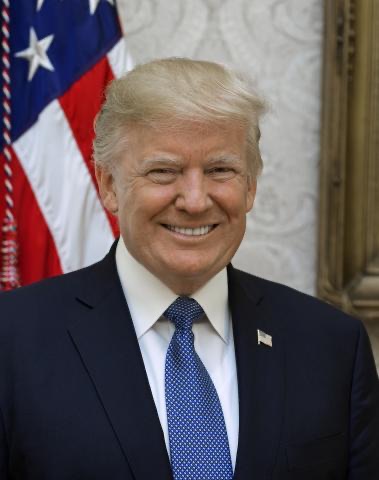
President of the United States
Commander, U.S. Central Command (Admiral)
Vice President of the United States

Acting Attorney General of the United States
Speaker of the Iranian Parliament
Trump Special Envoy (informal)

Secretary of Defense
Senate Minority Leader (D-NY)
Informal Trump Envoy
Iranian Foreign Minister
civic action
Contact your senators about the War Powers Resolution vote
The Senate voted 47-53 against a war powers resolution in March. Democrats are forcing a new vote April 13 as the 60-day clock expires April 28. Your senator's vote will determine whether Congress asserts its constitutional war power or cedes it permanently.
Hello, my name is [NAME] and I'm a constituent calling from [CITY/STATE]. I'm calling about the War Powers Resolution vote expected this week on the Iran conflict. The 60-day clock under the War Powers Resolution expires around April 28. Congress has the constitutional power to declare war under Article I, and a naval blockade is an act of war under international law. I'm asking Senator [NAME] to vote YES on the War Powers Resolution to require the president to seek congressional authorization. Can you tell me how the senator plans to vote?
monitoring
Track the economic impact of the blockade on energy prices
Oil jumped 7 to 8 percent on the blockade announcement. U.S. gas prices have already risen more than $1 per gallon since the Iran war began. The Energy Information Administration publishes weekly gas price data and the IEA tracks global supply disruptions.
civic action
Submit a public comment on DOJ's enforcement of Iranian oil sanctions
Acting AG Blanche announced criminal prosecution of anyone buying or selling sanctioned Iranian oil. The DOJ's OFAC enforcement guidelines are open to public scrutiny. You can review current sanctions rules and submit questions to DOJ's Office of Public Affairs.
monitoring
Follow CENTCOM's official updates on blockade enforcement
CENTCOM is the primary source for official U.S. military statements on the blockade. They publish press releases, Notices to Mariners, and operational updates. Independent maritime intelligence sources like Windward AI also track vessel movements in real time.