April 9, 2026
ArcelorMittal donated foreign steel to Trump's ballroom and got a $37 million tariff cut

The White House rewarded a steel donor with a federal tariff exemption worth $37 million
🔐Ethics📈Trade📜Constitutional Law🏛️Government
April 9, 2026
The White House rewarded a steel donor with a federal tariff exemption worth $37 million
On April 8, 2026, the New York Times reported that Trump's administration accepted a $37 million donation of European steel from ArcelorMittal, a Luxembourg-based steelmaker, for the White House East Wing ballroom renovation project. Trump had publicly announced the donation at a White House donor event in October 2025. The steel was manufactured in Europe and shipped to the United States. ArcelorMittal is the world's second-largest steelmaker by volume.
On April 2, 2026, Trump signed a proclamation modifying Section 232 steel tariffs, authorizing Commerce Secretary Howard Lutnick to cut tariffs in half from 25% to 12.5% on automotive steel from producers operating facilities in Canada or Mexico that supply U.S. automakers. ArcelorMittal operates a Canadian plant that exports automotive steel to the United States, making the company immediately eligible for the tariff reduction.
Governor Josh Shapiro of Pennsylvania immediately criticized Trump's use of foreign steel. He said: 'President Trump's use of foreign steel at the White House is a slap in the face to American steelmaking and the workers right here in Pennsylvania who power the industry. And he's doing it as his tariffs are screwing over workers and driving up costs.' Pennsylvania is a major steel-producing state with significant U.S. Steel and ArcelorMittal operations.
The sequence of events unfolded as follows: Trump praised the $37 million steel donation at an October 2025 White House donor event. On April 2, 2026, his administration cut tariffs in half on automotive steel from Canadian and Mexican producers, directly benefiting ArcelorMittal's Canadian plant. The New York Times published its report on April 8. A White House official told the Times the connection between the donation and the tariff cut was tenuous. Congressional Democrats and government ethics experts including Kathleen Clark, a professor at Washington University School of Law, publicly questioned whether the sequence constituted pay-to-play.
The sequence of events created a quid pro quo narrative. Trump praised a $37 million donation in October 2025, and his administration then authorized tariff cuts that directly benefited the donor company. A White House official told the Times the connection was 'tenuous.' Congressional Democrats and government ethics experts pointed to the situation as evidence of pay-to-play.
Aditya Mittal, CEO of ArcelorMittal since February 2021, holds an economics degree from the Wharton School. His father, Lakshmi Mittal, serves as executive chairman. ArcelorMittal emphasized its joint venture with Nippon Steel in Alabama and iron mining operations in Minnesota. However, the steel for the ballroom came from Europe, not from U.S. facilities.
Trump's Section 232 tariff proclamation on April 2, 2026 cut automotive steel tariffs from 25 to 12.5 percent specifically for producers operating facilities in Canada or Mexico that supply U.S. automakers. Commerce Secretary Howard Lutnick was given authority to administer the reduction. The targeted, geography-specific structure of the proclamation made ArcelorMittal's Canadian operations immediately eligible, while domestic U.S. steel producers received no corresponding benefit. U.S. Steel and other domestic producers had not donated materials to the White House renovation project.
Trump's April 2, 2026 Section 232 proclamation targeted a specific industry and geography: automotive steel from producers operating facilities in Canada or Mexico that supply U.S. automakers. ArcelorMittal's Canadian plant exports automotive steel to U.S. automakers and qualified immediately. Domestic U.S. steel producers who did not operate qualifying Canadian or Mexican facilities received no corresponding tariff reduction. The proclamation's narrow scope differed from the broader 25-percent Section 232 tariffs Trump imposed on all steel imports in 2018.
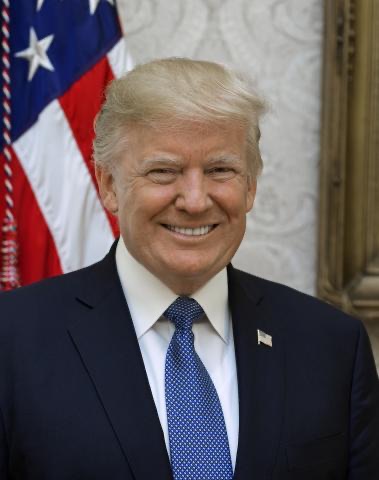
President of the United States
CEO, ArcelorMittal
Commerce Secretary
U.S. District Judge, District of Columbia
Governor of Pennsylvania
civic action
Contact your U.S. representative about pay-to-play in trade policy
The House Ways and Means Committee has jurisdiction over tariff policy.
I'm calling about the ArcelorMittal steel donation and Trump tariff cut. A company donated $37 million in European steel to the White House, and then Trump's administration cut tariffs on that company's automotive steel. I want Representative [Name] to demand an explanation of how the tariff decision was made.
civic action
File a FOIA request about the tariff decision
FOIA requests can reveal communications between Trump staff, Commerce Department, and ArcelorMittal.
I'm requesting all communications between the White House and Commerce Department regarding the April 2, 2026 proclamation modifying Section 232 steel tariffs.